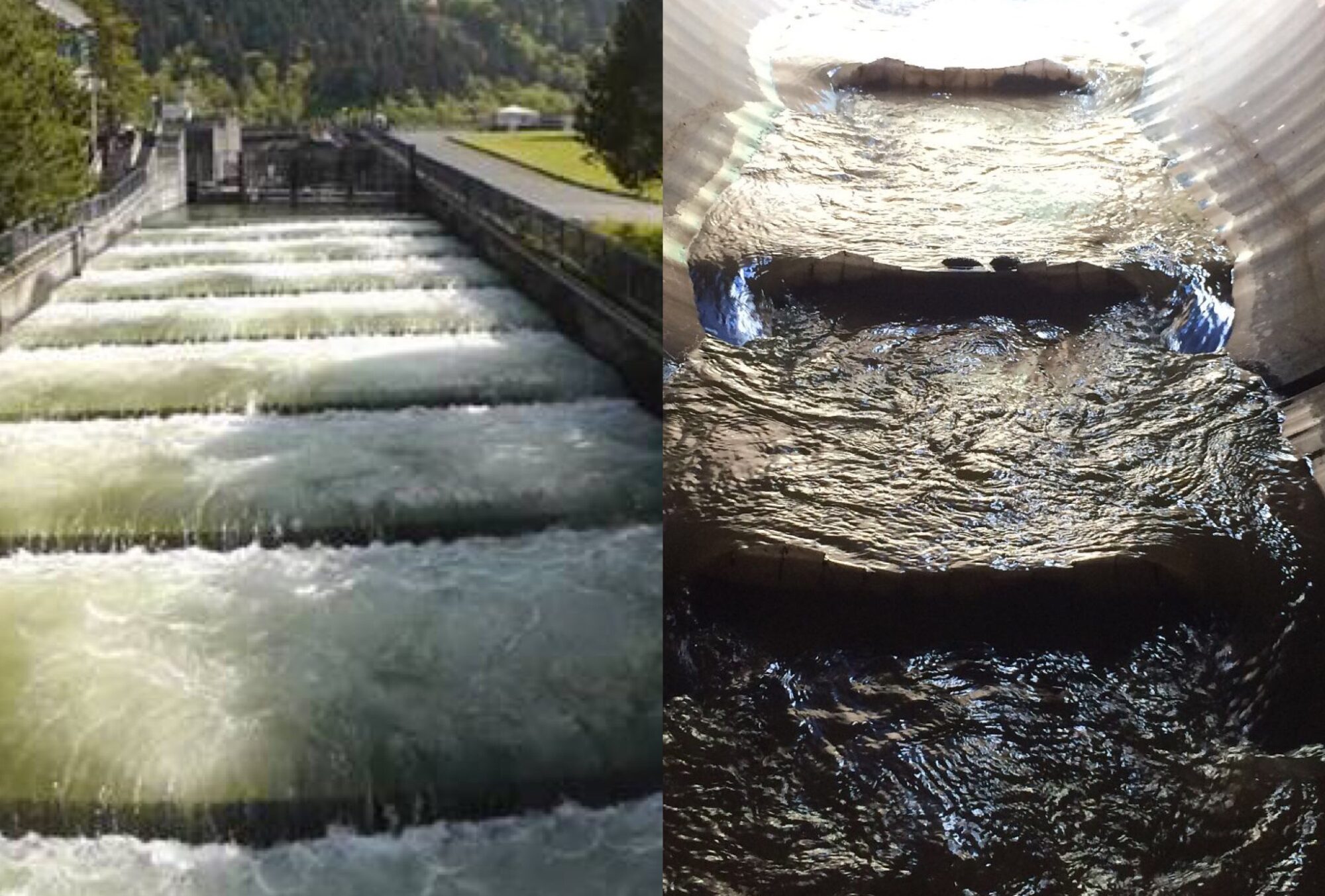

Over 30-plus years working on fish passage, I’ve watched more good culvert projects stall in the same spot than I can count. Not for lack of will, and not because there wasn’t a fish waiting upstream — but at the design step. Someone stands at a barrier culvert, knows baffles could help, and then hits the question that stops them cold: what, exactly, should go inside this pipe? Getting baffle height, spacing, and configuration right for a specific culvert takes hydraulic judgment, and when that judgment isn’t close at hand, the project quietly goes back on the shelf.
That’s why I’m glad to point practitioners across North America toward a new, free culvert baffle design tool that tackles exactly that step.
What the culvert baffle design tool does
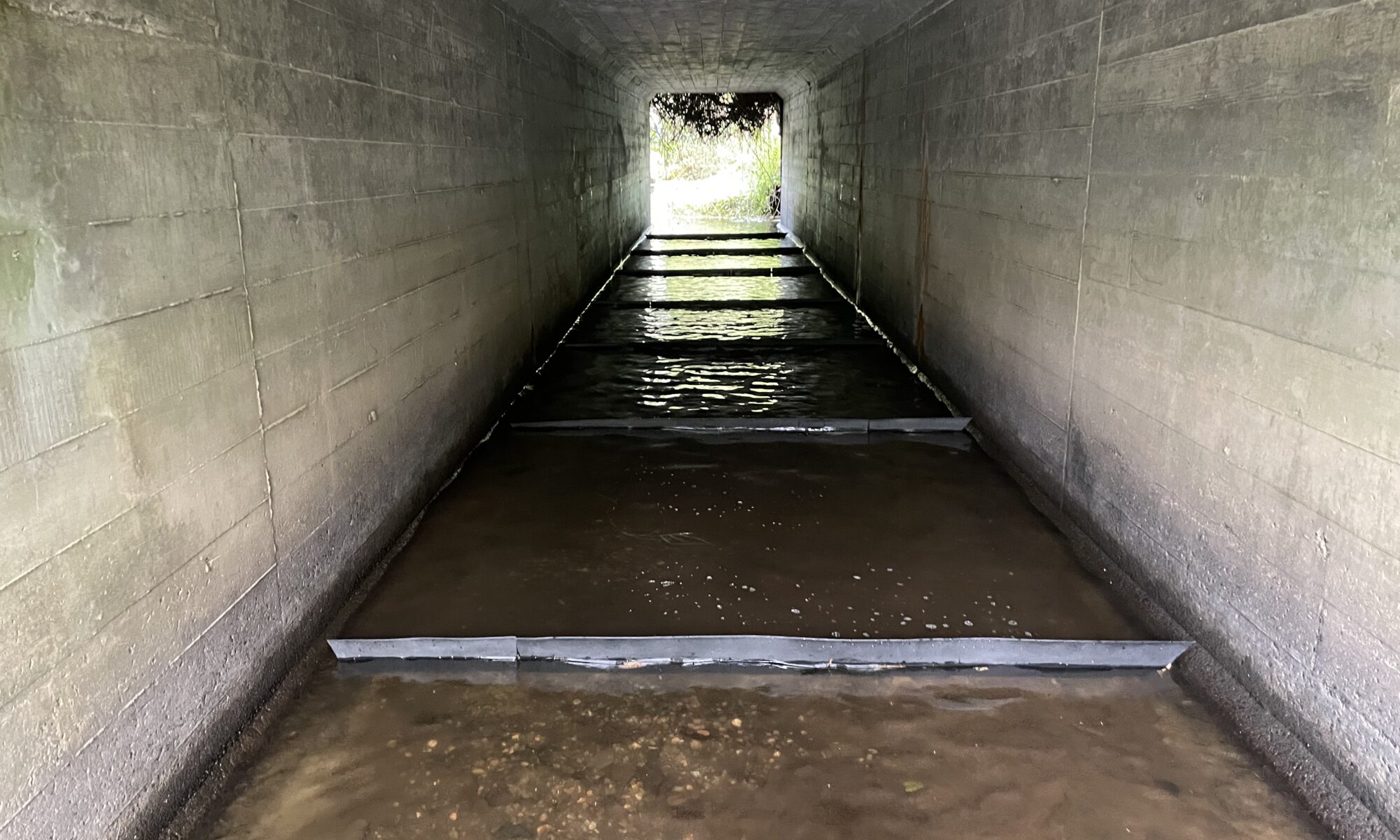
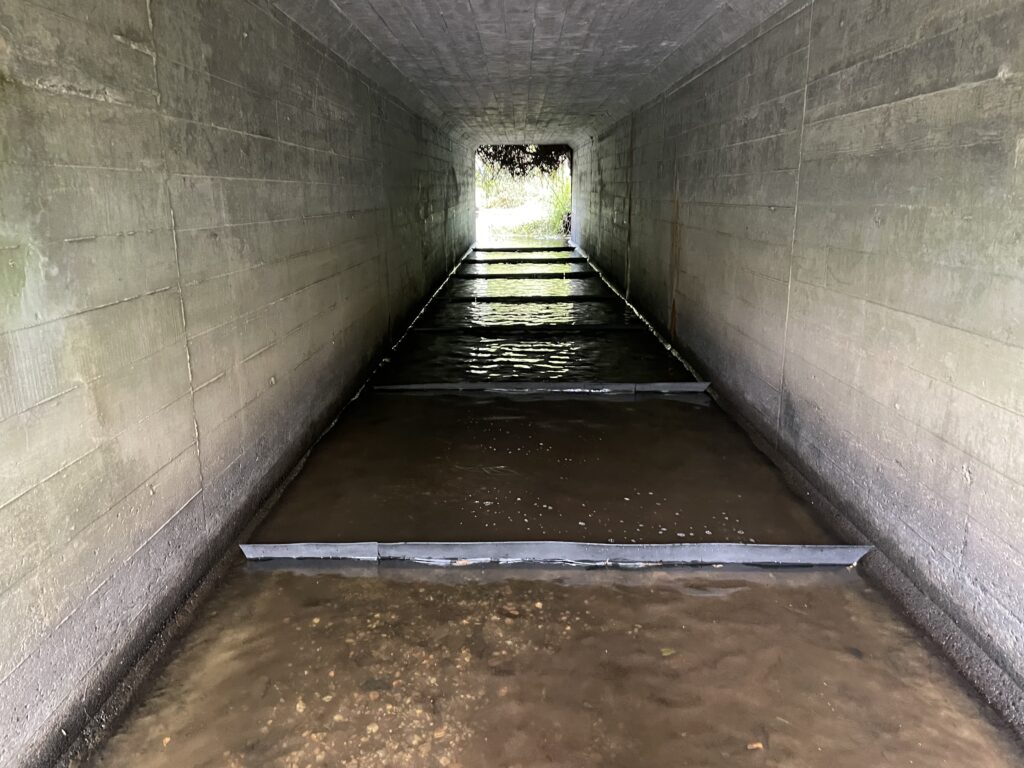
Our colleagues at the Fish Passage Action Team (FPAT) have built a Culvert Baffle Design Tool, hosted by our longtime partners at ATS Environmental in New Zealand — the folks we work with to bring FlexiBaffle technology to North America. It’s free, it’s online, and it does what that stalled project always needed. You enter your culvert’s characteristics — length, width or diameter, shape (round or flat-bottom), gradient, material, your preferred baffle height, whether you want an offset installation, and whether the culvert is perched or has an apron — and the tool puts together a tailored baffle layout for you: a set of schematic drawings showing the configuration, plus a materials list with baffle sizes, types, and the fixings you’ll need to install them.
The intent behind it is a more standardized approach to baffle design that still reads each site on its own terms. In plain language: it takes the intimidation out of culvert hydraulics, so the people who are ready to reconnect a stream can actually get moving.
Why this helps you improve fish passage
- It turns a stalled question into an installable plan. You leave with a drawing and a parts list you can price, order, and hand to a crew — not just a hunch about what might work.
- It’s consistent without being one-size-fits-all. The same sound design logic runs across sites, but your culvert’s shape, slope, and material drive the result.
- The output travels. Drawings and a materials list drop neatly into a permit file, a grant application, or a proposal to your council or board.
- It opens the door for more people. Councils, consultants, contractors, and volunteer watershed groups can all produce a defensible starting point without specialized modeling software.
One thing the tool can’t do for you
Here’s the part I always want practitioners to hear. The calculator asks whether your culvert is perched or has an apron for a good reason: baffles work on the conditions inside the barrel — velocity and depth in the pipe. They don’t fix a drop at the outlet, a perched culvert, or a floodgate. If that’s your primary barrier, it has to be solved first, or the baffles inside won’t help a fish that can’t reach them.
And I’ll say what I always say: baffles are not a replacement for the culvert. Pulling the structure out and restoring the stream is the better long-term outcome, every time. FlexiBaffles are an interim measure — a way to move fish through the years between identifying a barrier and funding its removal, so they aren’t left waiting on a budget cycle. When the culvert finally comes out, the baffles come out with it. This tool helps you design that interim fix well. It doesn’t tell you whether a retrofit is the right call for your site — that’s still a judgment for a person to make.
Try it — and send me what it gives you
Go run your site through the tool; it’s free and live now. Then, if you’d like a second set of eyes on the result, send me the output. I’ll give you an honest read — whether baffles will move fish at your crossing, or whether the real barrier is something baffles can’t touch and you’d be better served by a different approach. No charge, and no sales pitch. Just a straight answer from someone who’s spent a career on these crossings.
→ Try the Culvert Baffle Design Tool (free)
→ Read FPAT’s introduction to the tool
Shane Scott
Principal Biologist & Owner, SSA Environmental
shane@ssaenv.com | ssaenvironmental.com | (360) 601-2391