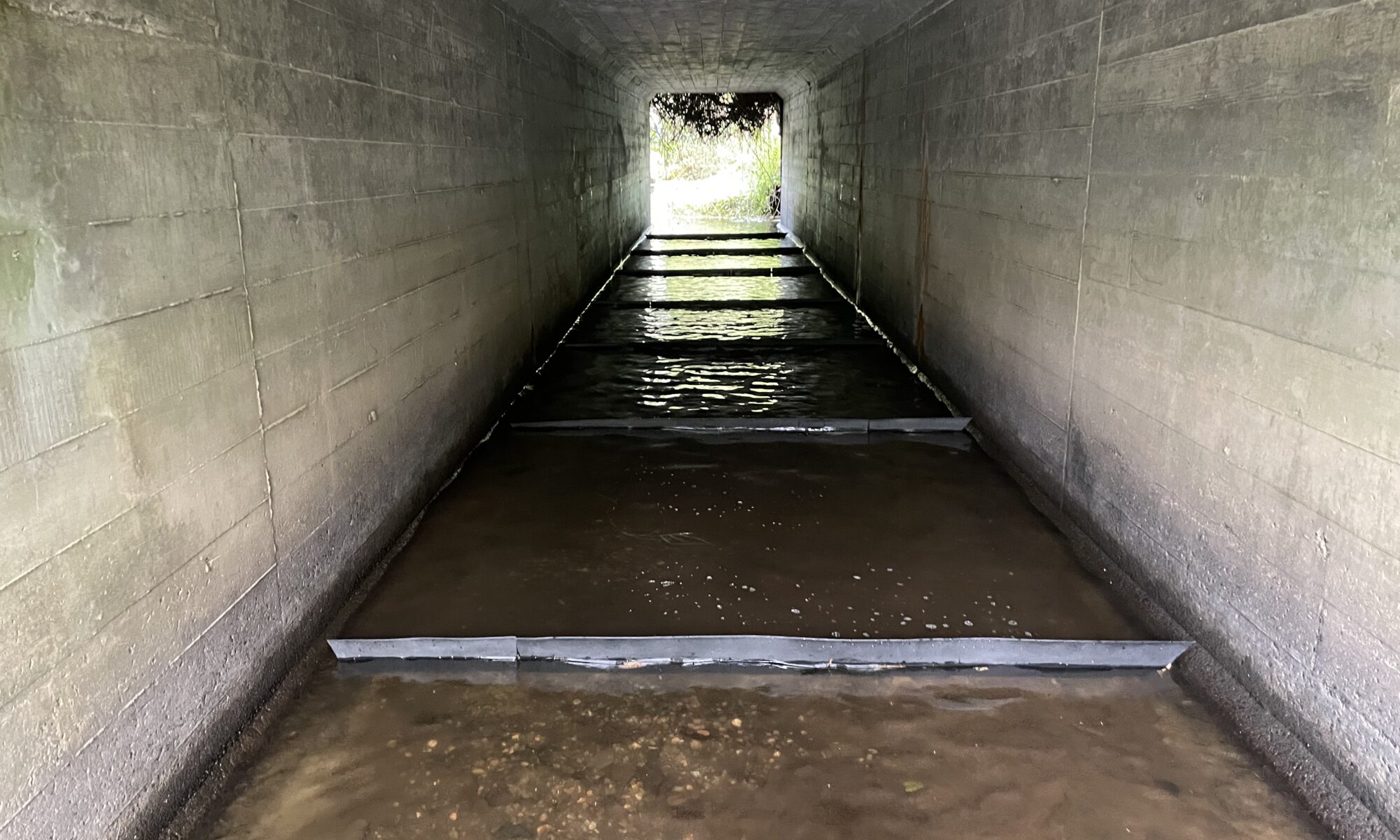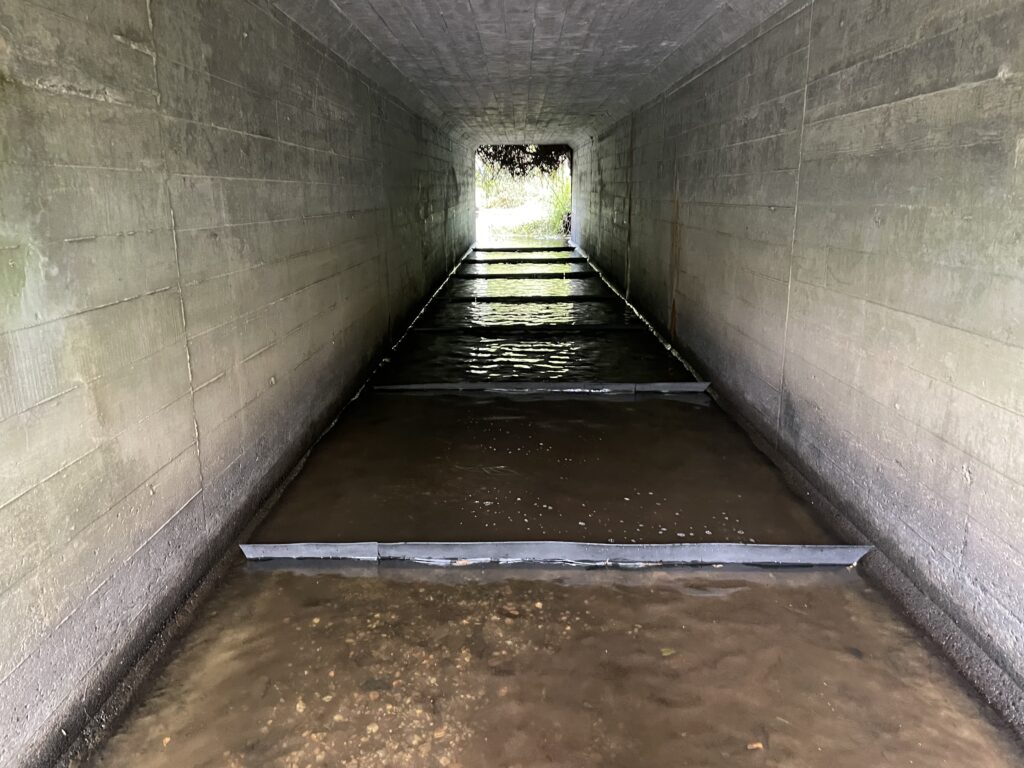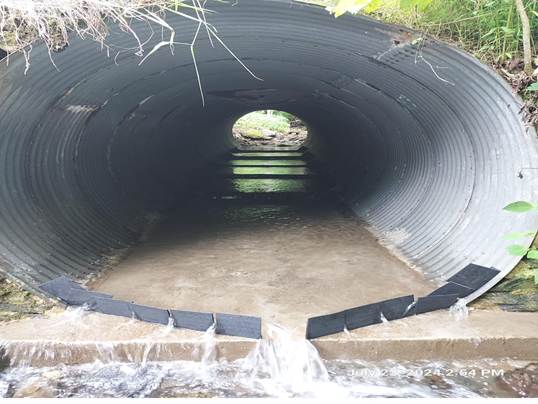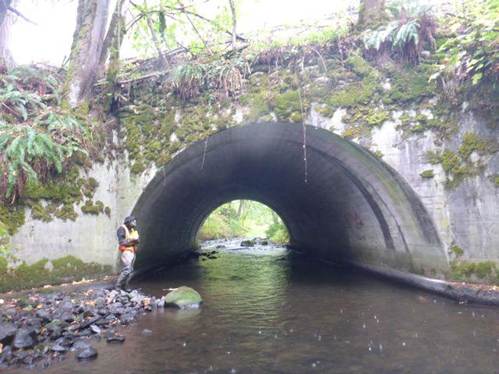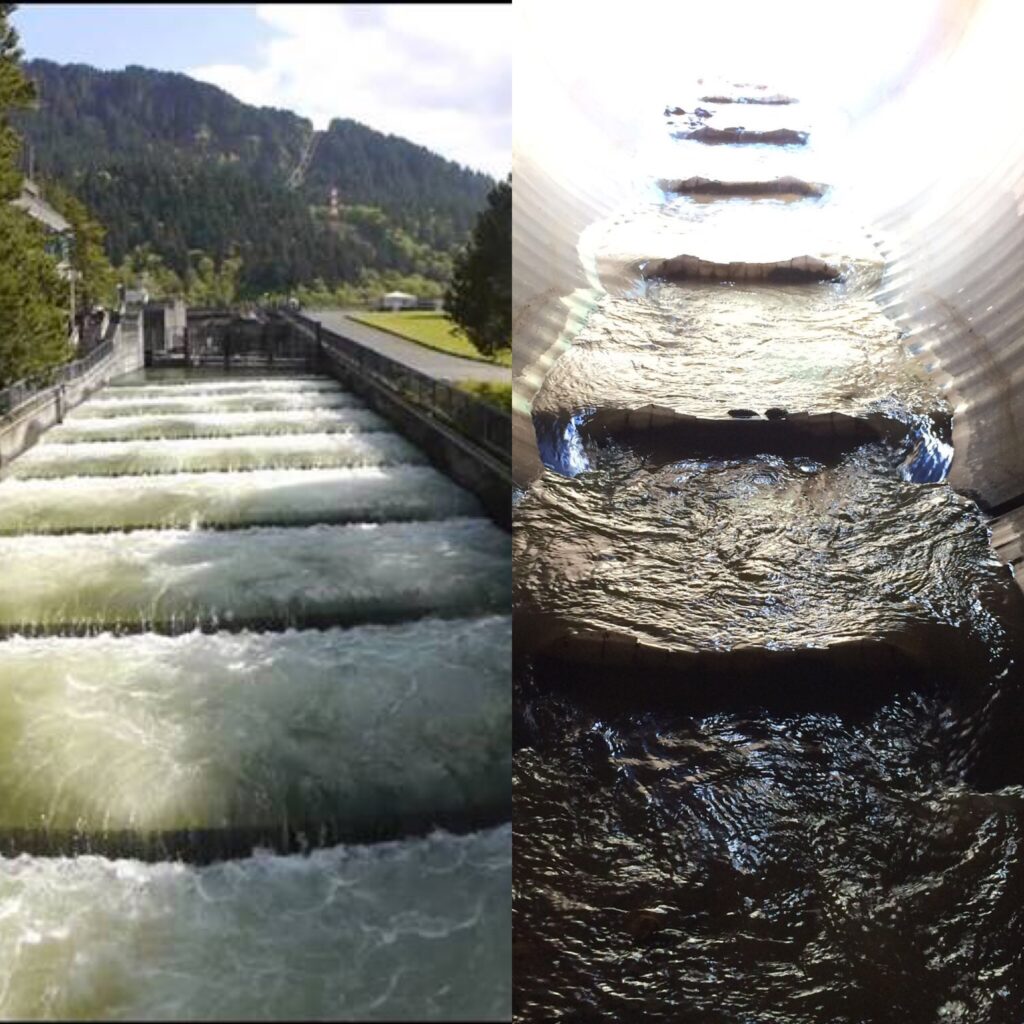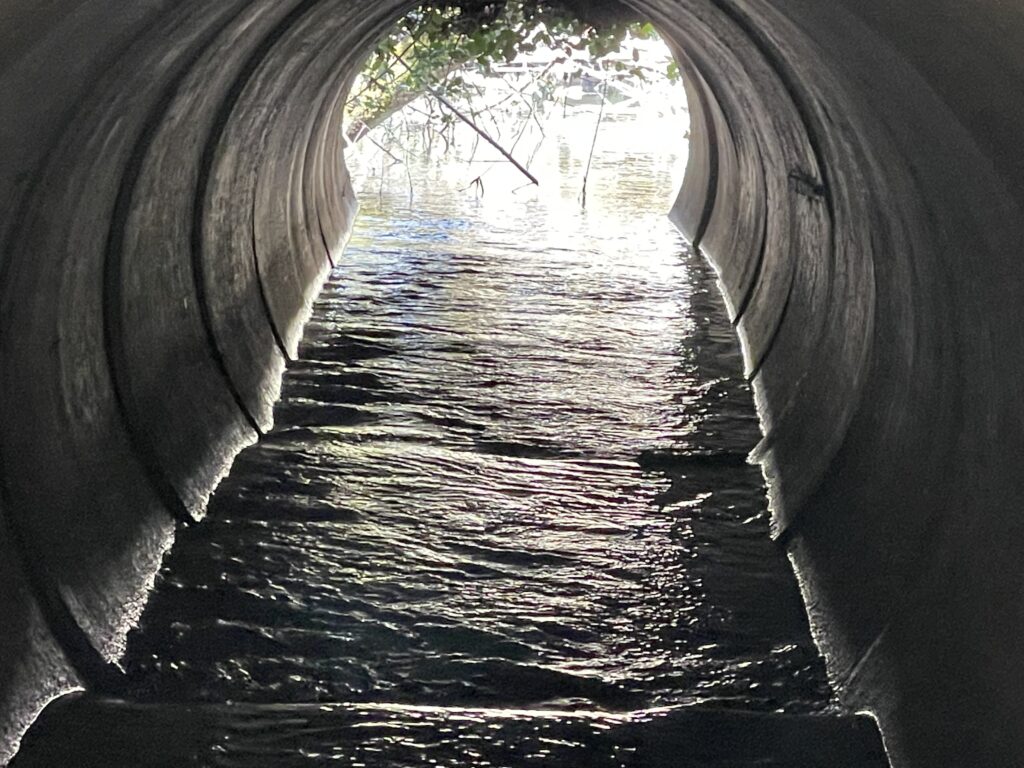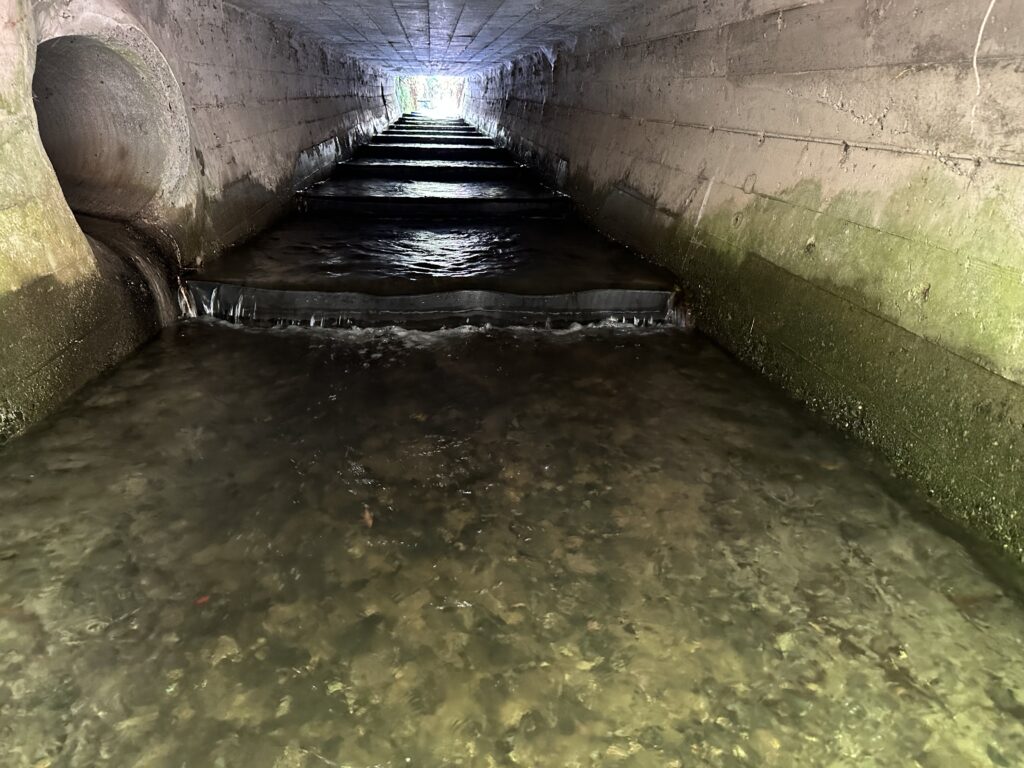
Culvert with offset FlexiBaffles to promote passage of small bodies or weak swimming fish
When it comes to improving fish passage, speed and simplicity matter — especially when retrofitting existing infrastructure on busy transportation corridors. A recent project in New Zealand shows just how quickly significant habitat connectivity gains can be made.
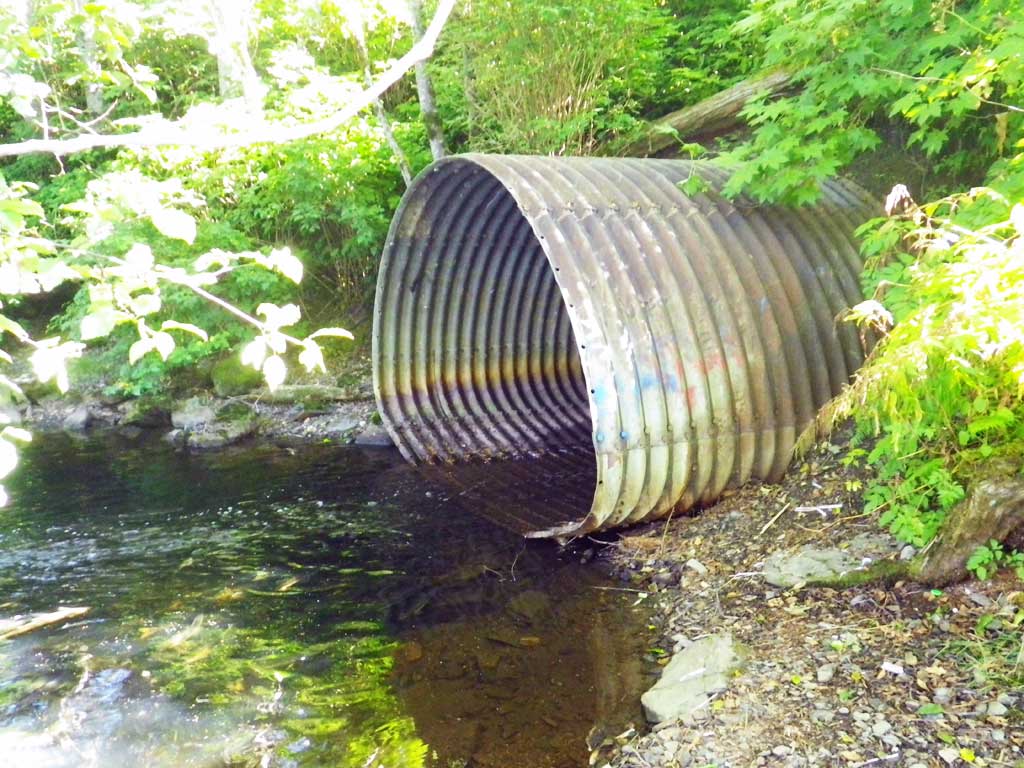
ATS Environmental, led by Kelly Hughes, recently upgraded a 120-meter-long, 1800mm-diameter HDPE culvert beneath a federal highway to improve passage for native freshwater species, including small-bodied galaxids and longfin eels. Both species struggle with the shallow depths and high velocities typical of smooth-walled culverts.
Installation in Just Three Hours
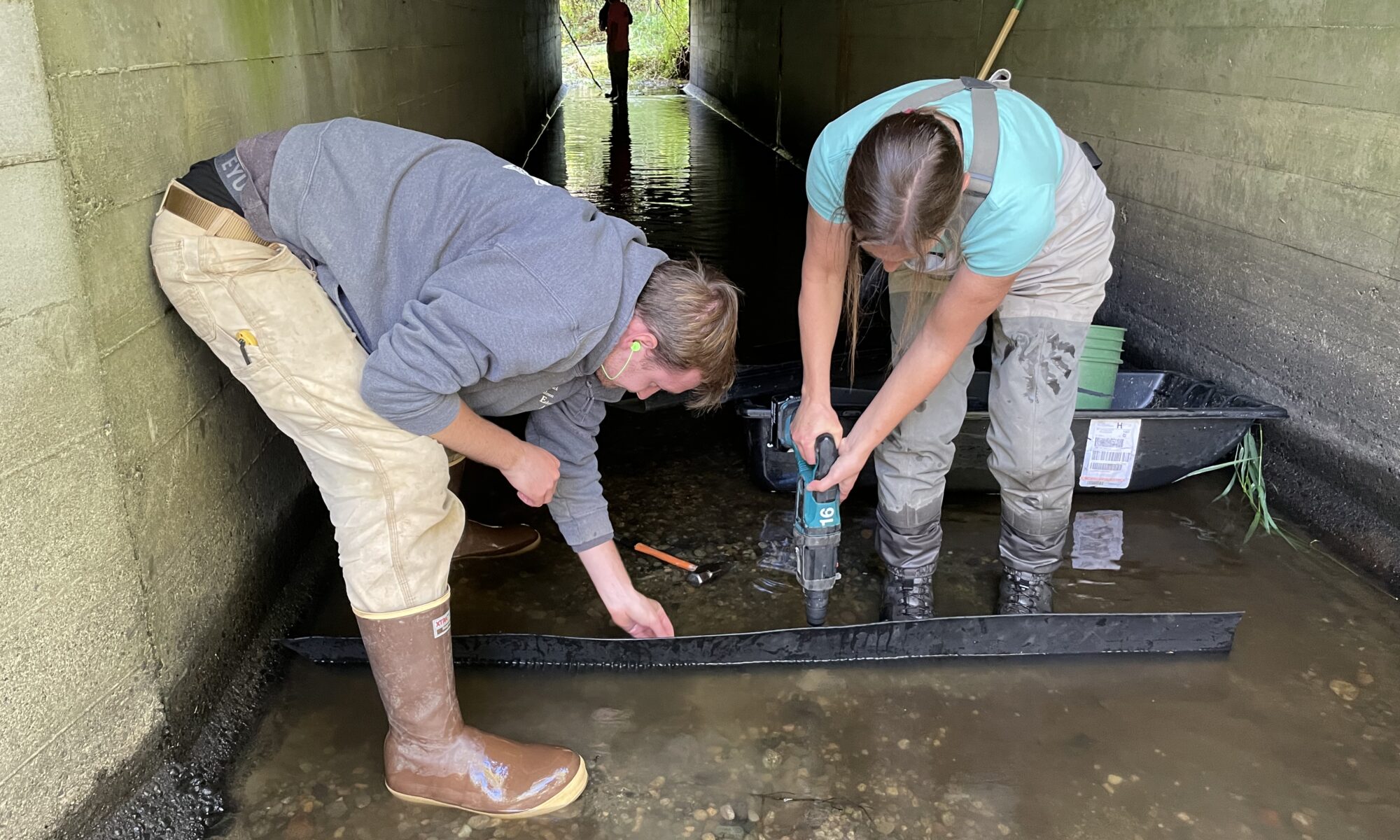
The ATS team retrofitted the culvert with 100 FlexiBaffles, each 600mm in length, fixed securely to the HDPE surface with stainless steel screws to ensure long-term durability.
The baffles were installed off-center by 50mm to create a preferential low-flow channel — a subtle but critical detail for enabling fish passage during dry periods or seasonal low flows. Despite the culvert’s 2% gradient and large diameter, installation took just three hours for a two-person crew using standard hand tools.
The retrofit delivered instant changes to flow conditions:
Water depth increased from 20mm to 80mm
Wetted width expanded from 1.5 feet to 2.5 feet
Water velocity decreased, creating rest zones and better swimming conditions
And the most important result: fish were able to pass through the culvert immediately after installation, demonstrating the design’s effectiveness in real time.
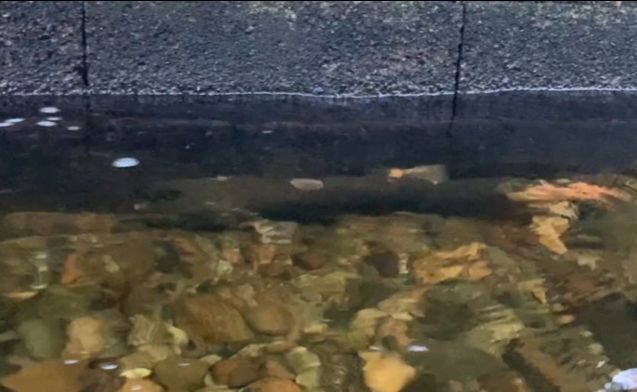
Juvenile Eel
A Scalable Solution for Fish Passage
This project is a clear example of how targeted retrofits can quickly restore connectivity for native species without expensive excavation or major construction. By increasing hydraulic complexity and mimicking natural stream conditions, FlexiBaffles give small-bodied fish and other aquatic organisms the opportunity to reclaim habitat previously cut off by infrastructure.
As New Zealand advances its freshwater restoration and biodiversity goals, practical solutions like this are not only helping native species recover — they’re setting a model for efficient, field-ready retrofits worldwide.
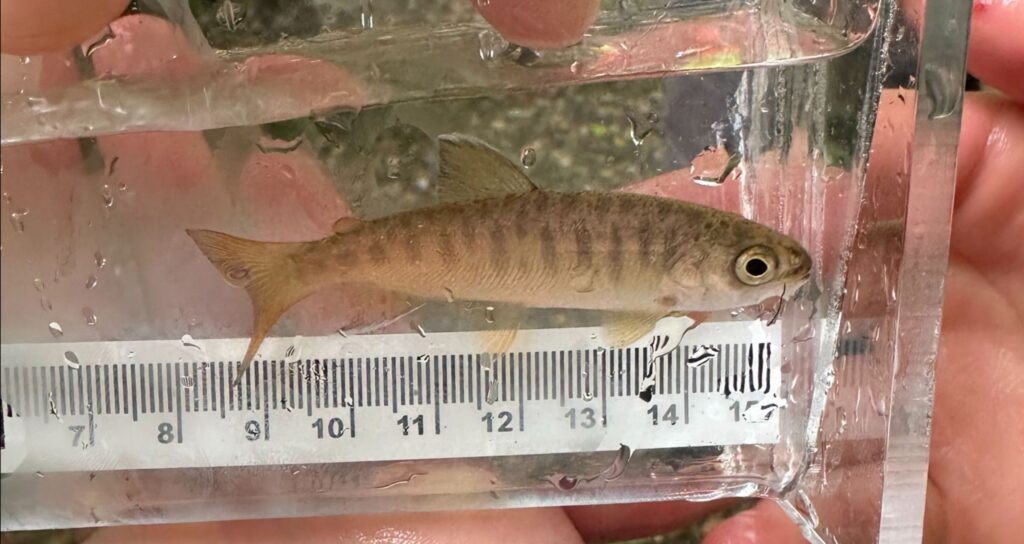
Galaxid sp.
Considering a culvert retrofit or fish passage upgrade? We can help you identify the right baffle configuration for your site — whether you’re working in New Zealand, North America, or anywhere habitat connectivity matters. For more information click here.
Thank you for your interest in learning more about the FlexiBaffle and how it can be used to improve fish passage in your culvert. These Frequently Asked Questions are intended to address many questions we routinely receive. The first section below provided information on how the FlexiBaffle works to improve fish passage, what it is made from and some examples of existing installations. The section section provided information on the design and installation of FlexiBaffles. If you have any other questions or comments regarding the FlexiBaffle or its use at your project, just click here to contact us!
1. General Information on the FlexiBaffle
What is a FlexiBaffle?
A FlexiBaffle is a flexible weir placed in culverts to enhance fish passage. It reduces water speed, increases water depth, and provides resting spots for fish and other aquatic life. The baffle’s flexible design ensures that debris and water can pass through safely during high flows. This maintains the culvert’s hydraulic capacity and minimizes blockages by allowing debris to move through easily.
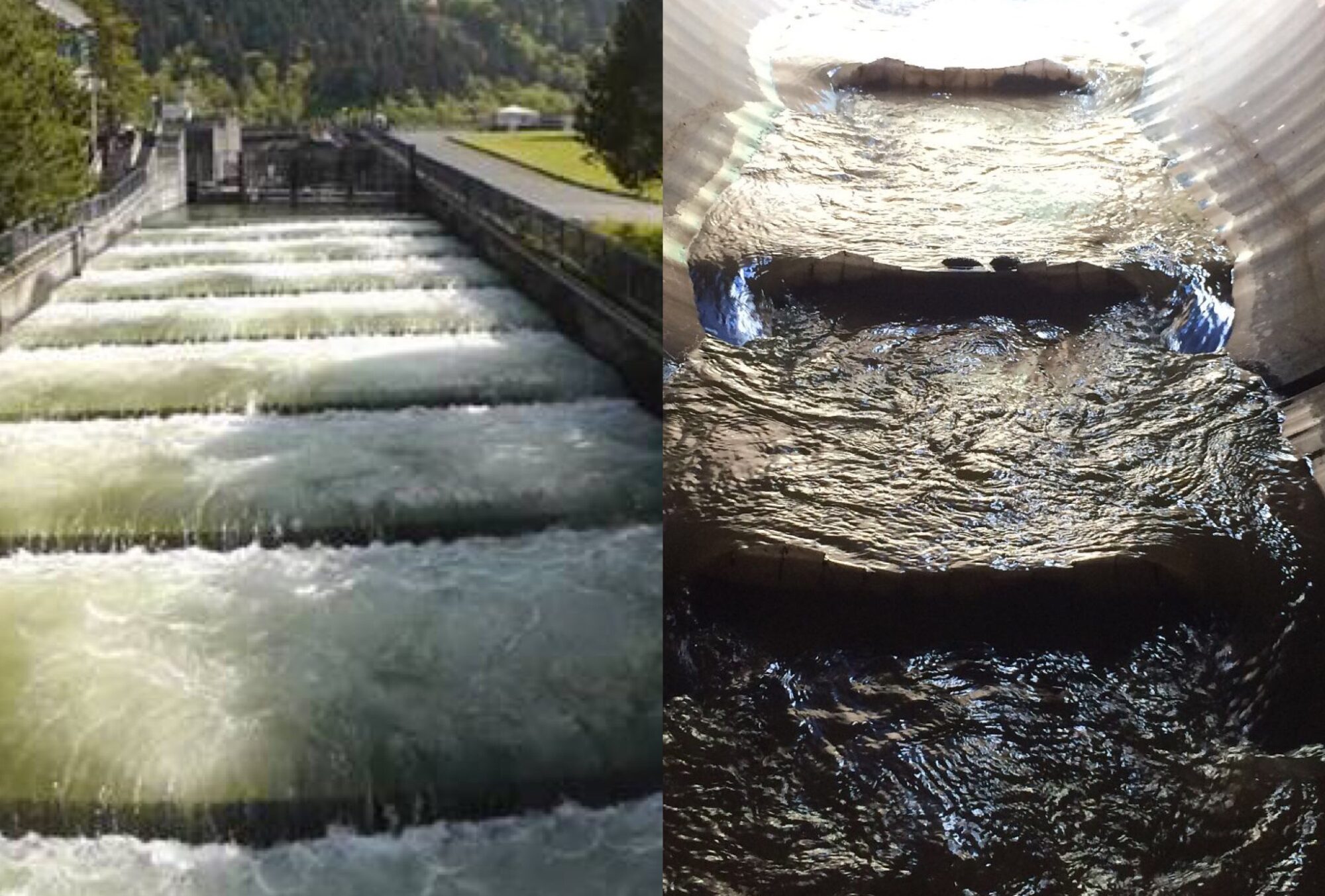
FlexiBaffles can turn your culvert into a fish ladder!
How do FlexiBaffles help fish passage?
Flexible baffles help fish and other aquatic organisms pass through culverts by:
Reducing water velocity, making it easier for aquatic organisms to swim through culverts.
Creating resting areas, allowing fish to conserve energy.
What aquatic species would benefit from the FlexiBaffle?
FlexiBaffles improve conditions for aquatic organisms in your culvert. Culverts are usually built to move water efficiently, which can create fast water currents and shallow depths that hinder movement of aquatic organisms. FlexiBaffles address this by adding complexity to the culvert’s interior, promoting more natural flow patterns. By replicating natural stream conditions around the culvert, they enable local aquatic species—like fish, eels, lamprey, amphibians, reptiles, and invertebrates—to navigate through it successfully.
What are the benefits of the FlexiBaffle versus solid baffles?
Minimal Flow Restrictions: They flex during high flows to preserve culvert capacity, unlike rigid baffles that reduce culvert capacity.
Reduced Debris Accumulation: Their flexibility allows debris to pass through, avoiding clogs that are common with solid baffles.
Easier Installation: FlexiBaffles require no major culvert changes, while concrete or metal baffles need extensive retrofitting and dewatering.
Cost-Effective: Lower costs for materials and transport, and ease of installation make them more affordable than heavy, rigid options.
Adaptability: They can be cut and shaped to fit various culverts, unlike metal or concrete baffles that need precise pre-fabrication.
Durability – able to withstand impacts from debris or high flows
What is the cost of FlexiBaffles as compared to other fish passage solutions?
Installing FlexiBaffles often costs less than 1% of what it takes to remove or replace a culvert. Disturbance to soils and traffic disruptions are avoided. While culvert removal or replacement is the most effective way to enhance fish passage, it’s often impractical due to high costs or disruptions to transportation and infrastructure. FlexiBaffles provide a simple, low-cost alternative for improving passage through existing culverts.
What is the cost of FlexiBaffle as compared to solid baffles?
FlexiBaffles are less expensive than solid baffles. In addition, they are much easier to install than solid baffles, making the FlexiBaffle significantly less costly.
What are FlexiBaffles made of?
Flex Baffles are made from EPDM (ethylene propylene diene monomer), a durable, non-toxic synthetic rubber known for its excellent resistance to abrasion, temperature extremes, UV exposure, ozone, aging, weathering, acids, and many chemicals. Common uses of EDPM include potable water collection systems, medical devices and automotive door and window seals.
How long are FlexiBaffles designed to last?
FlexiBaffles are a long-term solution for fish passage. We have FlexiBaffles that are performing well after 15 years. We suggest a lifetime of 10-years for planning purposes. Regular inspections ensure continued effectiveness.
Can FlexiBaffles be used in all types of culverts?
Yes, FlexiBaffles are suitable for circular, box, and arch culverts. They can be installed in culverts made of plastic, concrete and metal.
Where have FlexiBaffles been installed?
Originally developed in New Zealand, FlexiBaffles now number in the thousands worldwide, with installations across Australia, Europe, and North America—currently spanning 15 U.S. states and 4 Canadian provinces, with more added regularly.
Where are FlexiBaffles manufactured?
FlexiBaffles are manufactured in the United States using all American-sourced materials.
Can FlexiBaffles withstand extreme temperatures?
Yes, EPDM rubber withstands a wide temperature range, remaining flexible in cold conditions and resistant to heat up to 150°C (302°F).
Do FlexiBaffles create microplastics?
No, FlexiBaffles are made of EPDM (ethylene propylene diene monomer), a synthetic rubber, not plastic. This material is non-toxic, 100% recyclable, and highly resistant to degradation.
Do Flex Baffles contain chemicals toxic to fish, such as 6PPD-quinone?
No, FlexiBaffles are made from EPDM, a durable, non-toxic synthetic rubber. They do not contain harmful chemicals like 6PPD-quinone, which has been identified as toxic to fish.
What are the effects of FlexiBaffles on the hydraulic capacity of culverts?
FlexiBaffles installed in a culvert can increase Manning’s “n”-value by about 10% to 30% compared to standard pipe.
For a corrugated metal pipe, a conservative recommendation would be n=0.030
For a smooth surface pipe such as concrete or HDPE, a conservative recommendation would be n=0.020
Do FlexiBaffles catch debris?
The FlexiBaffles are designed to “bend over” in high flows to help preserve the hydraulic capacity of your culvert. The flexible design allows debris to pass through the culvert unimpeded. Once the water flow declines after a freshet, the baffle reorients and creates a fish ladder in your culvert.
What is the experience of others using FlexiBaffles for fish passage?
Many users have successfully installed FlexiBaffles to enhance fish passage. Click on the pictures below to watch videos demonstrating real-world installations.
The Johnson Creek Watershed Council in Portland, Oregon installed the first FlexiBaffles in North America in 2018. They have since installed FlexiBaffles at two more sites. Click on the image to watch a short video on this project.
#image_title
#image_title
The New York Department of Environmental Conservation installed FlexiBaffles in 2018 in a box culvert in Cook’s Brook located in the Town of Colchester, Delaware County. Click on the image to watch a short video on this project.
The City of Ketchikan, Alaska installed FlexiBaffles in a large culvert in 2024. Fish started moving into the culvert within two hours after it was watered up! Their consultant made a video of the installation. Click on the image to watch a short video on this project.
#image_title
The City of Surrey, British Columbia has installed FlexiBaffles at several sites throughout the City. One FlexiBaffle installation resulted in Pacific salmon returning to a watershed for the first time in over 70 years. Click on the image to watch a short video from the City of Surrey on the FlexiBaffle installation on Bon Accord Creek.
Do I need a permit to install FlexiBaffles?
Permit requirements vary by location and regulatory authority. Check with local environmental agencies for guidelines.
How do I order FlexiBaffles?
Please click here and we can help develop a proposed FlexiBaffle configuration for your fish passage project!
2. Design & Installation of the FlexiBaffle
How are FlexiBaffles installed in culverts?
In corrugated metal or HDPE plastic culverts, FlexiBaffles are installed using self-tapping screws.
In concrete culverts, they are installed with wedge anchors.
We recommend using stainless steel hardware for durability and to reduce corrosion.
Click here for FlexiBaffle installation instructions.
Does installing FlexiBaffles damage a culvert?
No. We recommend you use wedge anchors that do not completely penetrate through the concrete culvert. We have no reported damage to culverts in the thousands of FlexiBaffles installations around the world.
Do I have to dewater the culvert to install the FlexiBaffles?
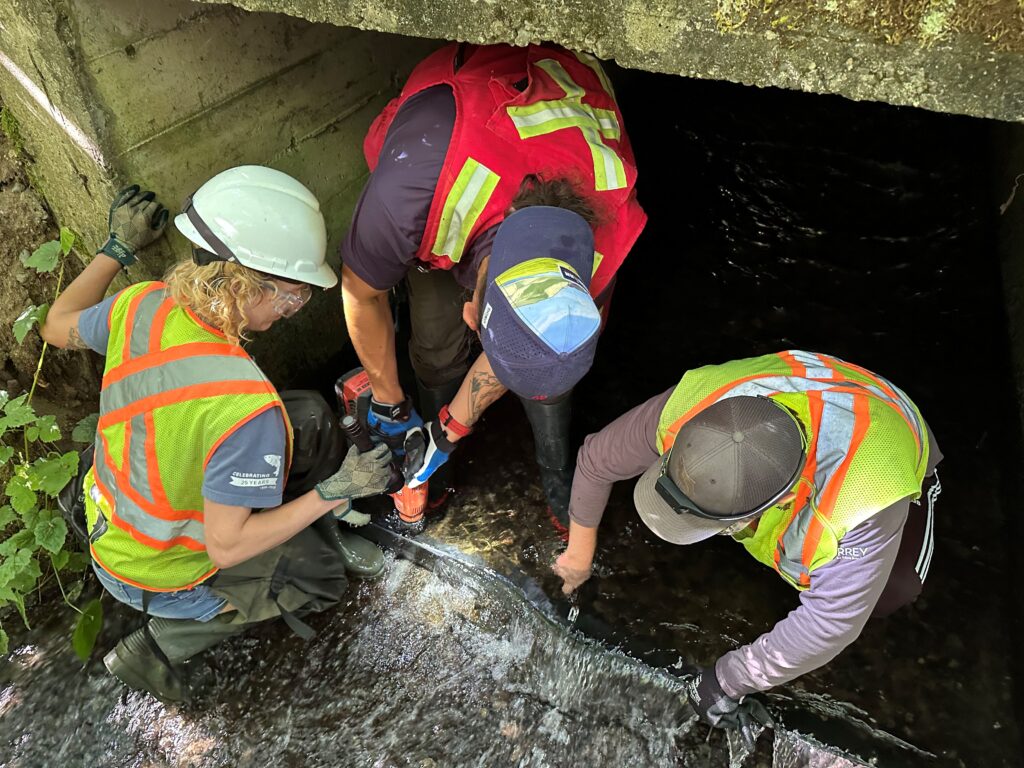
No, you do not need to dewater the culvert. Most often, FlexiBaffles can be installed with water in the culvert using proper tools such as extensions on drills.
What size FlexiBaffles should I use?
The appropriate size depends on culvert dimensions and the target fish species. Click here for FlexiBaffle size and spacing recommendations or contact us for guidance.
What FlexiBaffle spacing do you recommend?
Spacing depends on culvert gradient and target fish species. Click here for spacing guidelines or contact us for assistance.
What are the maintenance requirements for FlexiBaffles?
Regular inspections to ensure baffles remain secure.
Need more information or assistance?
We hope we answered most of your questions. For more information, please contact us at:
Across Oregon, thousands of culverts block fish migration, creating significant obstacles for species like salmon, trout, and Pacific lamprey. Many of these outdated culverts create high water velocities, shallow depths, and steep drop-offs, making it nearly impossible for fish to move upstream to their spawning habitats.
Oregon has made great strides in fish passage restoration, but one of the biggest challenges remains: cost. Replacing a culvert with a bridge or an open-bottom structure often costs millions of dollars, making it financially impossible to restore all blocked waterways.
As a fisheries biologist with over 30 years of experience, I have seen firsthand how cost-effective solutions can make an immediate impact. This is why I am submitting comments to the Oregon Department of Fish and Wildlife (ODFW) Fish Passage Task Force, advocating for the implementation of FlexiBaffles—a proven, affordable alternative for fish passage restoration.
What Are FlexBaffles?
FlexiBaffles are an innovative solution designed to improve fish passage through culverts by reducing water velocity and increasing depth. Unlike traditional rigid baffles (which are often clogged with debris), FlexiBaffles bend under high flow conditions, allowing debris to pass while maintaining a series of pools and steps that help fish migrate upstream.
✅ Reduces water velocity for easier fish passage ✅ Increases water depth in culverts ✅ Does not clog with debris like solid baffles ✅ Low-cost alternative to culvert replacement ✅ Can be installed quickly with minimal maintenance
Successful Implementations of FlexiBaffles
FlexiBaffles have been successfully installed in multiple locations across North America, New Zealand, and Europe, improving fish passage for a variety of species.
Schoenbar Creek, Ketchikan, Alaska
A 475-foot culvert was resurfaced with concrete and retrofitted with 81 FlexiBaffles, restoring fish passage.
Material cost:$35,000—a fraction of full replacement costs.
Bon Accord Creek, Surrey, BC
A 500-foot-long concrete channel, previously impassable for 70 years, was restored using 60 FlexiBaffles, reopening 2.5 km of upstream habitat.
Material cost:$18,700, installed in just four days.
Reservoir Creek, Nelson, New Zealand
A 136-meter culvert was retrofitted with FlexiBaffles, allowing inanga and redfin bully to pass upstream for the first time.
Comparing Costs: FlexiBaffles vs. Culvert Replacement
One of the biggest barriers to fish passage restoration is the high cost of culvert replacement. A typical culvert replacement project can cost anywhere from $1 million to $20 million, depending on location, permitting, and infrastructure needs.
Real-World Cost Comparisons:
Project
Culvert Replacement Cost
FlexiBaffle Retrofit Cost
Harris Creek, WA
$5,319,000
$8,900 + one-day labor
Watercress Creek, WA
$1,878,000
$4,700 + two-day labor
💰 In both cases, FlexiBaffles saved over 99% of the cost compared to full culvert replacement!
Why Oregon Needs to Act Now
According to the National Aquatic Barrier Inventory, there are over 775,000 road-related aquatic barriers in the Pacific Northwest, with tens of thousands of culverts restricting fish migration in Oregon alone.
Yet, fewer than 0.5% of these barriers have been removed or mitigated due to funding limitations and infrastructure constraints.
We need cost-effective, practical solutions that can be deployed quickly.FlexiBaffles provide exactly that.
My Recommendations to the ODFW Fish Passage Task Force
I am urging the ODFW Fish Passage Task Force to:
1️⃣ Pilot FlexiBaffle installations in high-priority culverts across Oregon. 2️⃣ Incorporate FlexiBaffles into Oregon’s fish passage guidelines as a cost-effective alternative to full culvert replacement. 3️⃣ Work with municipalities and transportation agencies to integrate low-cost fish passage retrofits into infrastructure planning.
By taking proactive steps now, we can restore critical fish migration pathways, support Oregon’s salmon and lamprey recovery efforts, and make fiscally responsible investments in our aquatic ecosystems.
Join the Conversation!
I invite fellow biologists, conservationists, policymakers, and anyone passionate about fish passage solutions to join this discussion. Let’s work together to implement cost-effective strategies that truly make a difference.
👉 Have experience with fish passage restoration? Leave a comment below! 👉 Interested in learning more about FlexiBaffles? Let’s connect!
Fish passage barriers are frequently managed on a case-by-case basis. Initially, barriers are identified, characterized, and then subjected to a prioritization scheme. The correction of these barriers typically occurs when funds become available. However, the sheer volume of projects renders this approach impractical. In response to this challenge, our colleagues in New Zealand have pioneered a program aimed at managing fish passage barriers at a watershed scale.
The Structures in Waterways management program, developed by ATS Environmental, integrates a field collection component with a desktop management interface, enabling users to collect and manage data on fish passage barriers. This program operates using commonly utilized GIS and database management software, facilitating seamless integration with existing culvert management programs. Furthermore, it allows users to plan, estimate costs for barrier solutions, and generate reports on the status of barriers at a watershed scale.
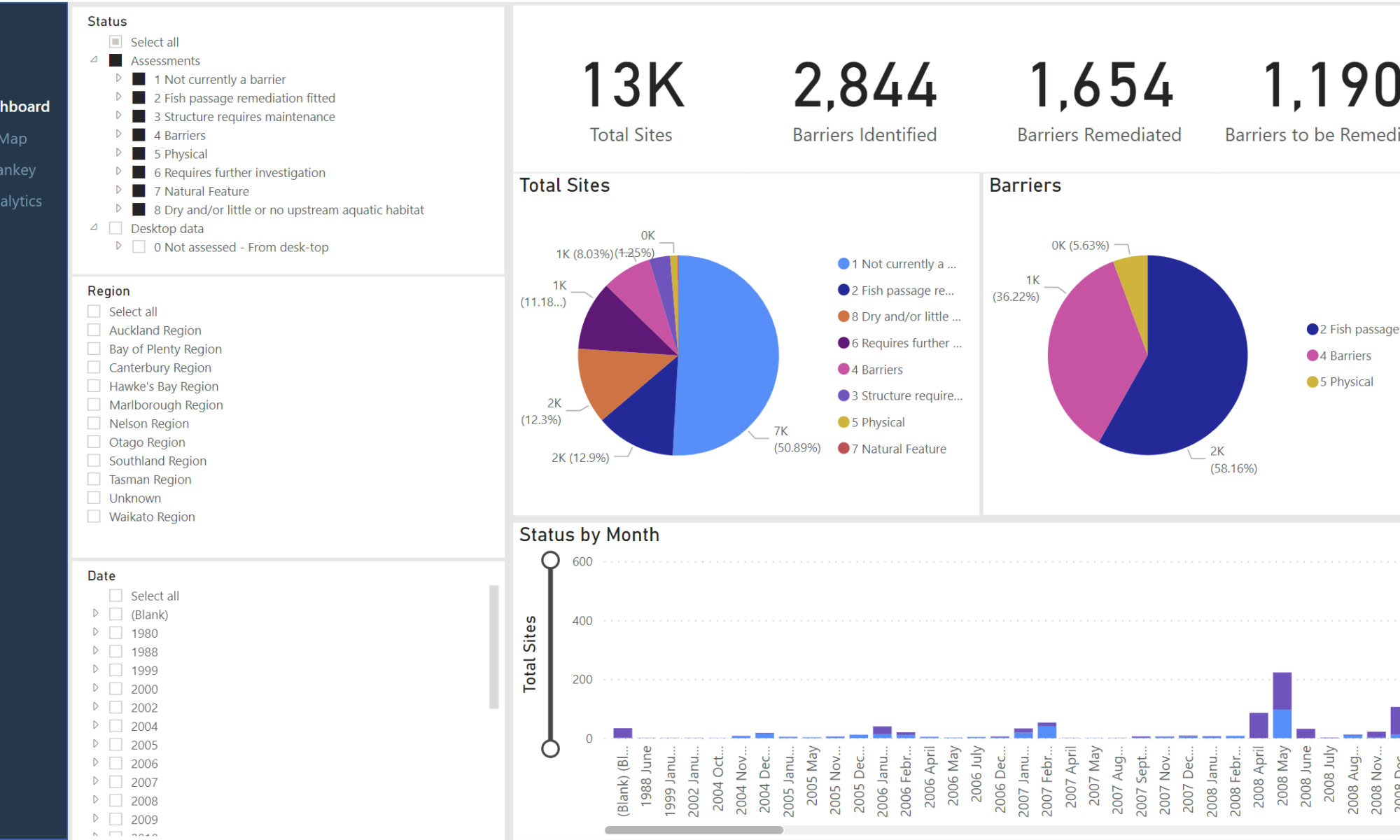
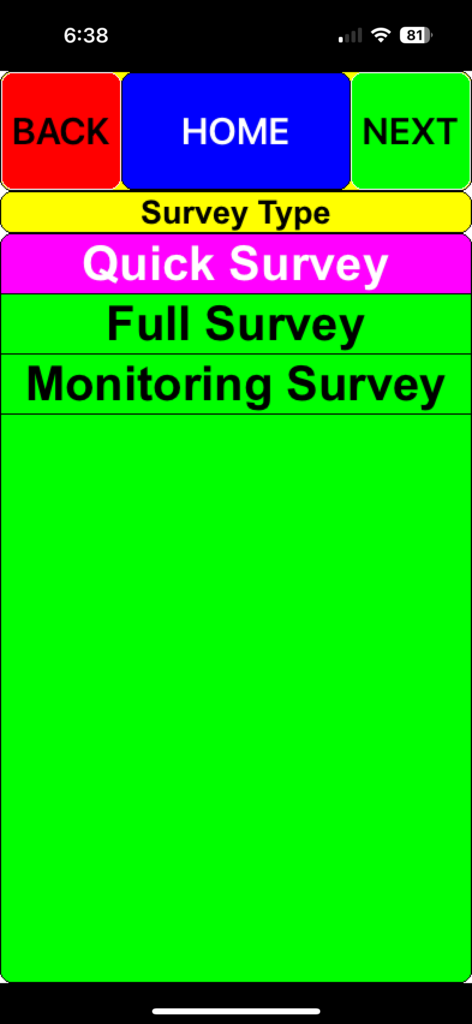
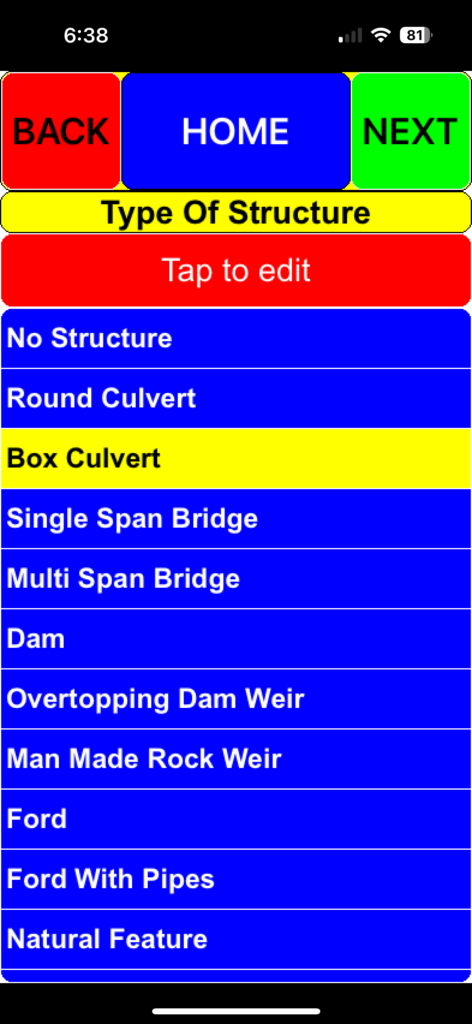
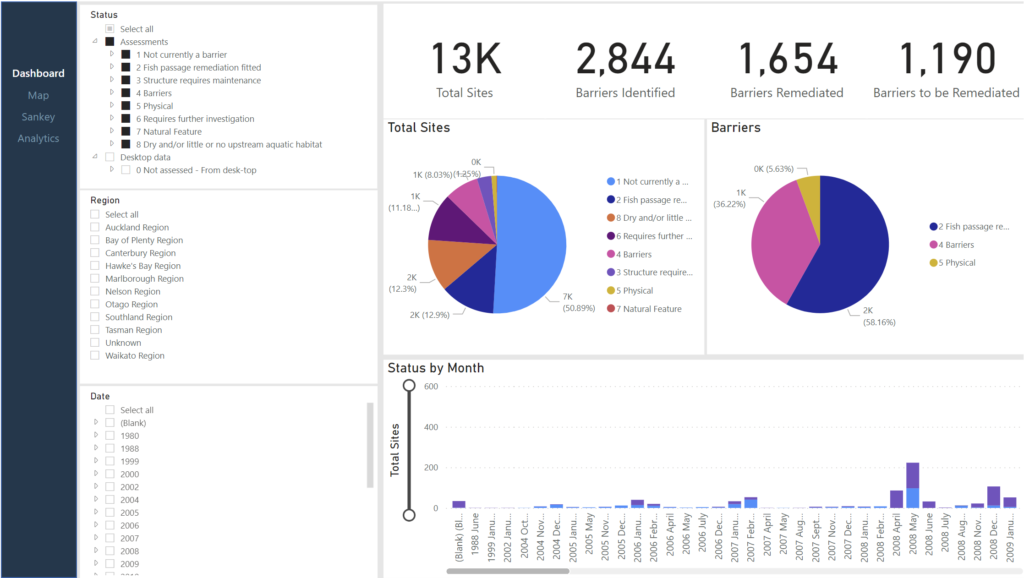
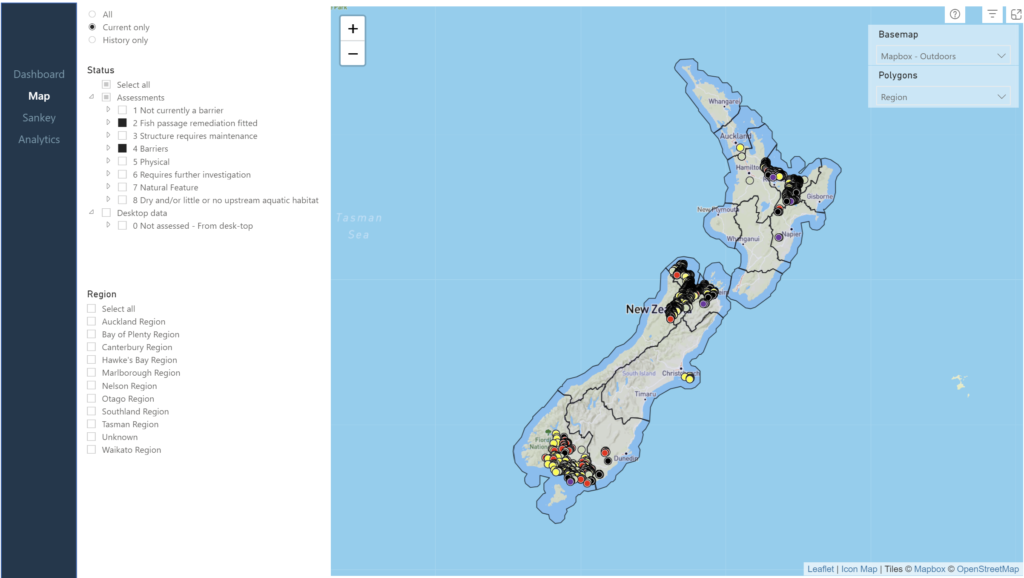
The initial step involves uploading existing fish passage barrier information into the database. Newly identified and characterized structures are automatically uploaded to the database through a cloud connection using a field app. Following this, algorithms are employed to prioritize and sort the barriers within the list. The desktop dashboard then provides users with four summary displays, presenting the number, location, and status of the barriers.
Finally, users have the capability to generate reports that estimate costs and schedule barrier remediation. These reports serve as valuable tools for planning future actions or reporting progress to higher levels of authority, showcasing the efforts undertaken to enhance fish passage on a watershed scale.
How We Use the Structures in Waterways Database to Manage Fish Passage Barriers in New Zealand
Here is a summary video of how the Structures in Waterways program is used in New Zealand to manage fish passage barriers on a watershed basis.
Structures in Waterways Field Application
These are three screen shots demonstrating the Structures in Waterways field app. The user collects the necessary information which is then automatically uploaded to the desktop application.
#image_title#image_title#image_title
Structures in Waterways DesktopApplication
This summary screen allows the user to see the number and status of all the fish passage barriers in a geographic area.
This screens allows the user to see the location and status of all the fish passage barriers in a geographic area.
#image_title
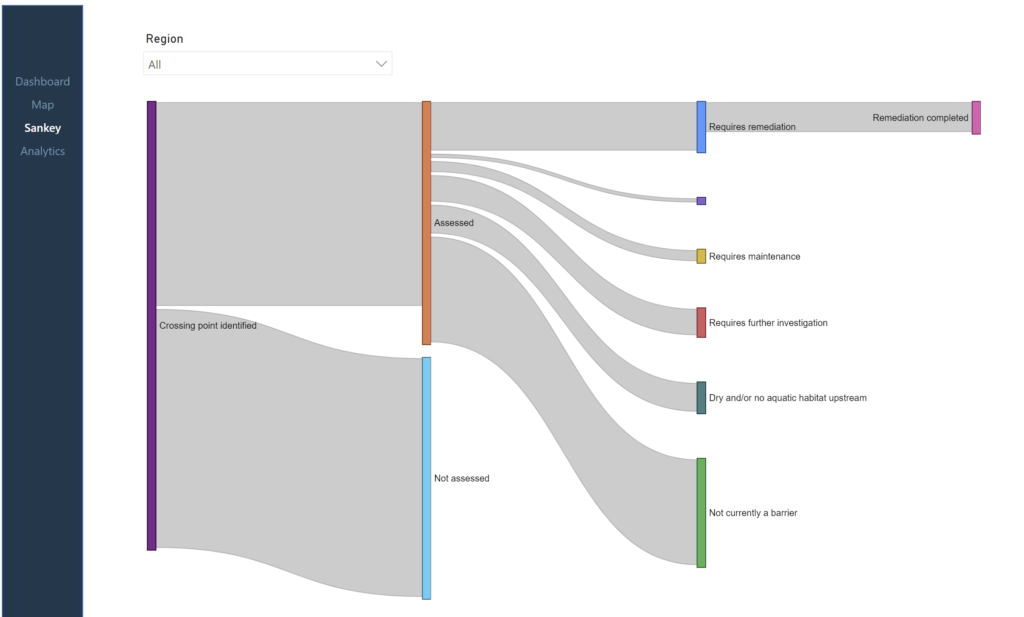
This screen allows the user to graphically see the status and progression of fish passage barrier assessment and remediation.
#image_title
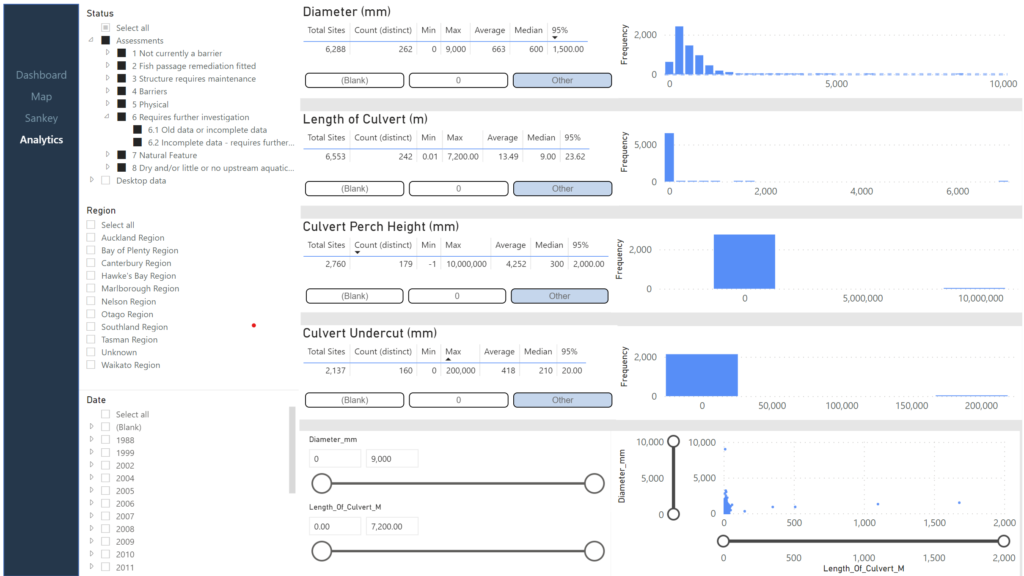
This screens allows the user to see the particulars of fish passage barreriers on a watershed scale.
Embarking on a project that spans over three decades in my career as a fisheries biologist, I recently experienced one of the most gratifying accomplishments of my journey. After almost 70 years, coho salmon have finally regained access to their spawning habitat in Bon Accord Creek, Surrey, British Columbia.
This achievement was no small feat. Nearly seven decades ago, a railroad company redirected Bon Accord Creek through a 500-foot-long concrete flume, creating a barrier that prevented coho salmon from reaching approximately 2.5 kilometers of vital spawning grounds. Despite commendable efforts by the City of Surrey to enhance upstream salmon habitats, the costs estimated to remove the concrete flume and stabilize the banks were staggering, totaling in the millions of dollars. These costs hindered progress and obstructed the salmon’s migratory path.
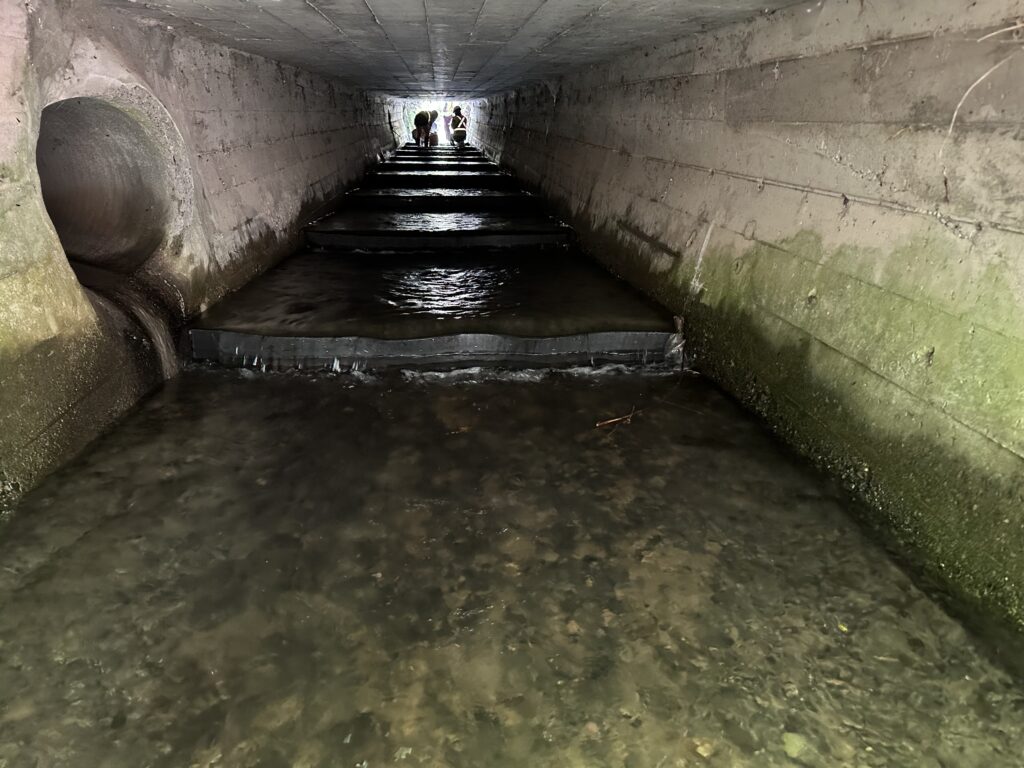
To address this challenge, we collaborated closely with the City’s environmental staff, evaluating various solutions. The breakthrough came with the innovative FlexiBaffle system. Working alongside a dedicated group of student volunteers, we strategically installed sixty 2-meter-long FlexiBaffles at intervals along the length of the flume. This installation marked a milestone as the largest of its kind in North America.
The impact was immediate and exhilarating! Following the installation and the onset of significant November rainfall, an adult coho salmon was sighted navigating the native channel above the flume. This marked a monumental success and a testament to the effectiveness of our solution.
To celebrate this milestone, the City held a dedication ceremony on November 24th. The presence and support of Surrey’s Mayor, Council Members, and several Legislative Assembly Ministers underscored the significance of this achievement. The project received well-deserved attention in various newspapers and reports.
This victory, however, is just the beginning of a new chapter. Moving forward, the City is committed to closely monitoring the success of fish passage through Bon Accord Creek, ensuring the sustained return of coho salmon to their spawning grounds.
This triumph serves as a testament to the power of collaboration, innovation, and perseverance in the realm of environmental conservation. It showcases how collective efforts can restore the balance of ecosystems, fostering the return of vital species like the coho salmon to their natural habitats.
The revival of Bon Accord Creek stands as a beacon of hope and inspiration for similar conservation efforts worldwide, reflecting our dedication to preserving and revitalizing the natural world we share. 🌎🐟 #SalmonRevival #EnvironmentalSuccess #BonAccordCreekRestoration
First Coho Salmon in Bon Accord in 70 years.
Mayor of Surey makes comments at the Bon Accord Creek Fish Passage Dedication
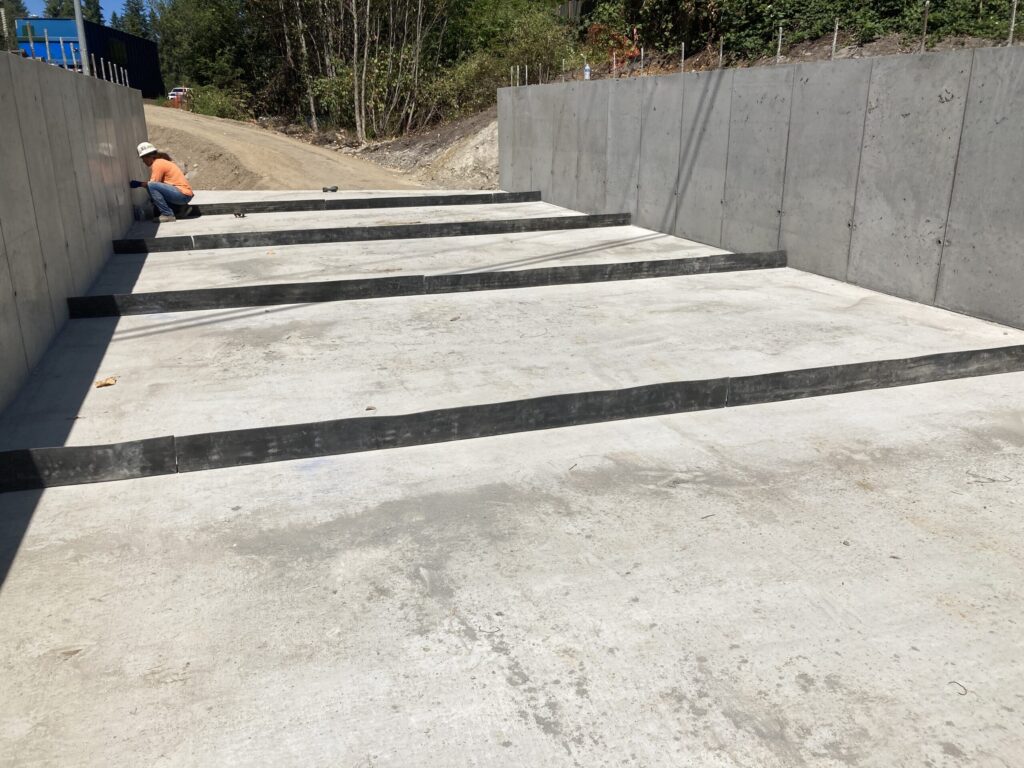
Another successful FlexiBaffle installation. We worked with the City of Surrey, B.C. and students with the Salmon Habitat Restoration Program (SHaRP) to implement the largest culvert rehabilitation project in North America. A large concrete flume on the Bon Accord Creek, a tributary of the lower Fraser River, has blocked salmon from accessing important salmon spawning habitat for many decades. We worked with City staff to develop a FlexiBaffle installation plan to increase water depth and slow water velocity to create conditions much more conducive to salmon passage.
Below are two strores from local media on the project.
The Johnson Creek Watershed Council (JCWC) developed the North Fork Open Migration project conceived as a multi-partner collaboration aimed at eliminating all seven barriers to fish passage in the North Fork of Johnson Creek, near Gresham Oregon. The JCWC worked with a variety of entities to remove, replace and/or repair culverts that were a barrier to fish passage.
In 2018, JCWC made history becoming the first practitioner in North America to utilize the FlexiBaffle culvert retrofit technology to improve fish passage through culverts that are not planned to be replaced. The FlexiBaffle, developed by ATS Environmental from New Zealand creates step pools in a culvert to improve fish passage. Water velocities are reduced, and water depth increased, all to improve fish passage. ATS began working with their partner SSA Environmental to bring their unique fish passage technologies to North America. Since that time, JCWC has installed FlexiBaffles in two additional culverts.
This story describes the work and success of the Johnson Creek Watershed Council in improving fish passage.
Reporters with the Municipal Water Leader magazine interviewed Shane Scott, owner of SSA Environmental, on his experience with the Flexi Baffle. The Flexi baffle is a flexible weir that is installed in culverts to improve fish passage. In this interview they discuss the history of the FlexiBaffle, some current applications and the future of SSA Environmental.
Another successful FlexiBaffle installation. We worked with the City of Surrey, B.C. and students with the Salmon Habitat Restoration Program (SHaRP) to implement the largest culvert rehabilitation project in North America. A large concrete flume on the Bon Accord Creek, a tributary of the lower Fraser River, has blocked salmon from accessing important salmon spawning habitat for many decades. We worked with City staff to develop a FlexiBaffle installation plan to increase water depth and slow water velocity to create conditions much more conducive to salmon passage.
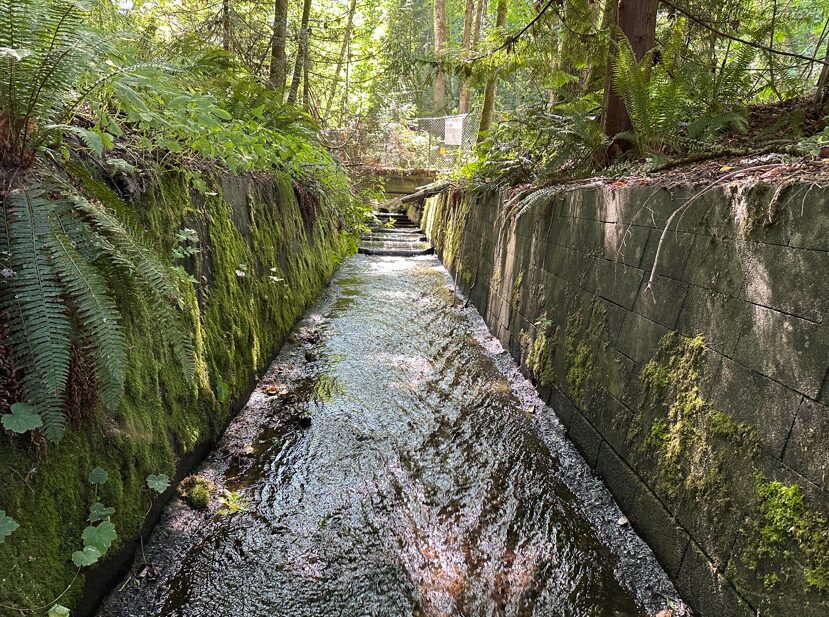
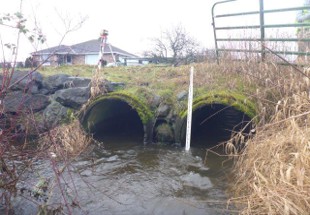
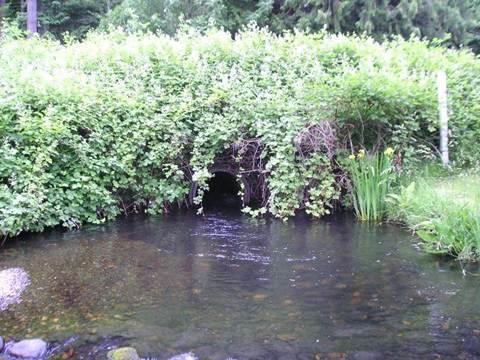
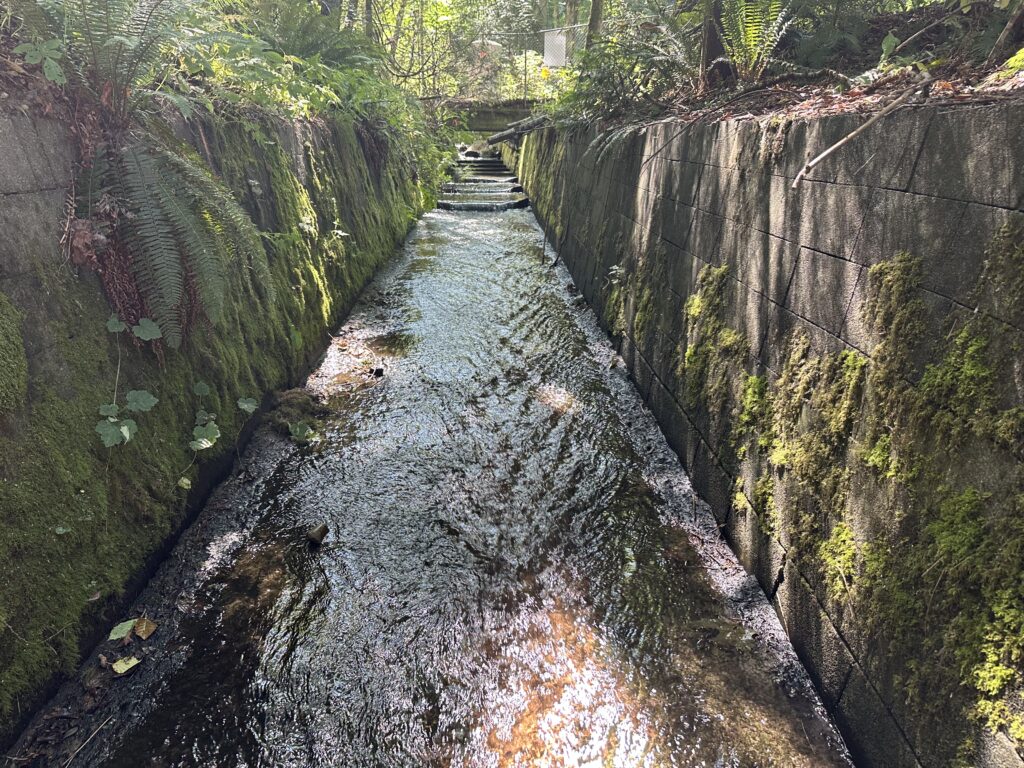
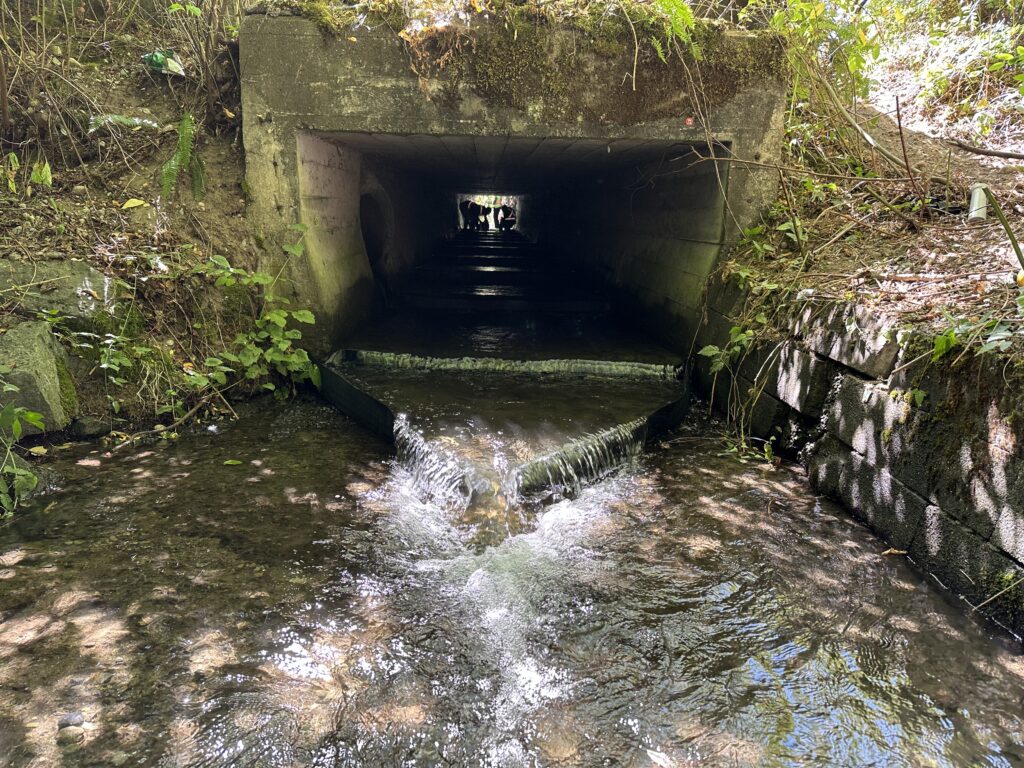
Bon Accord Creek before FlexiBaffle Installation
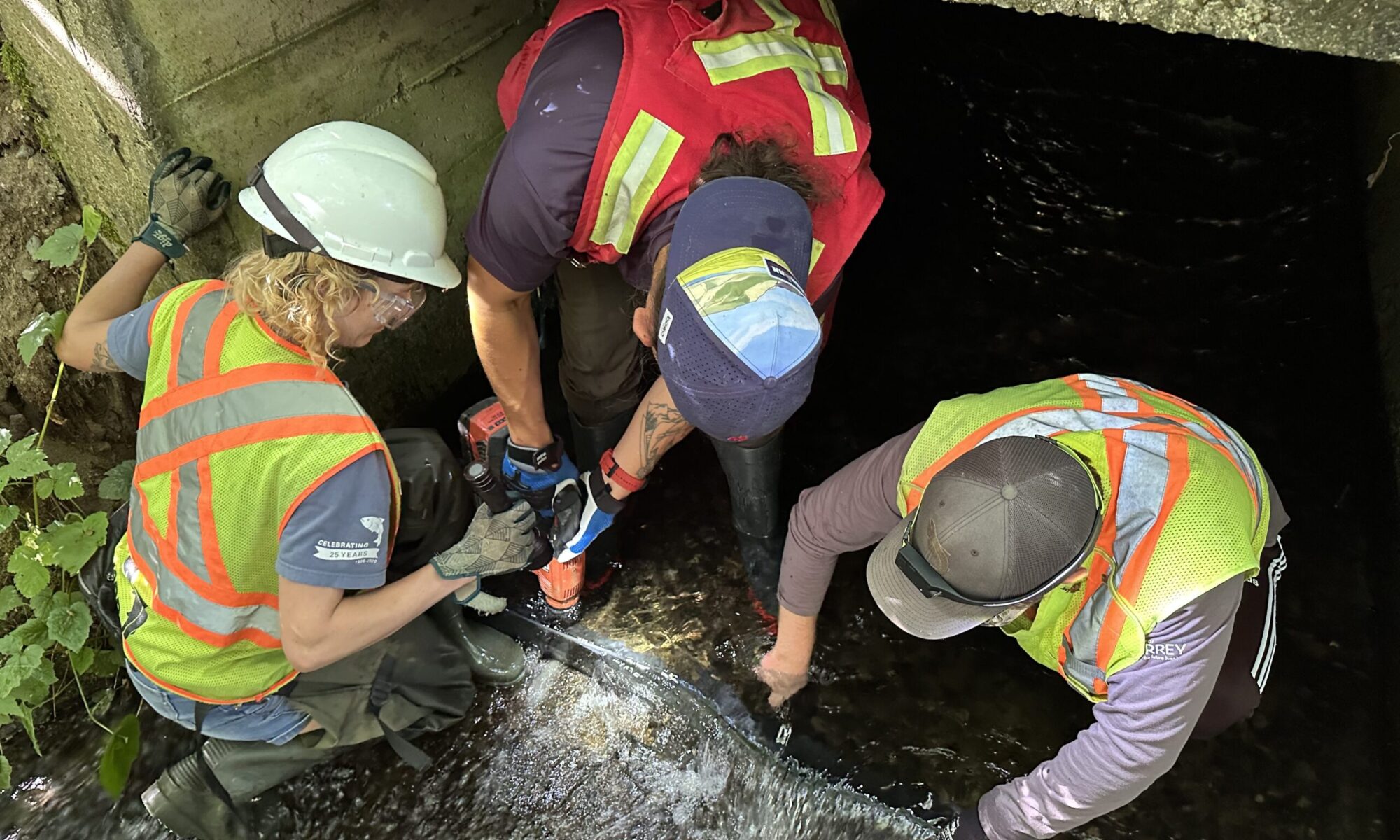
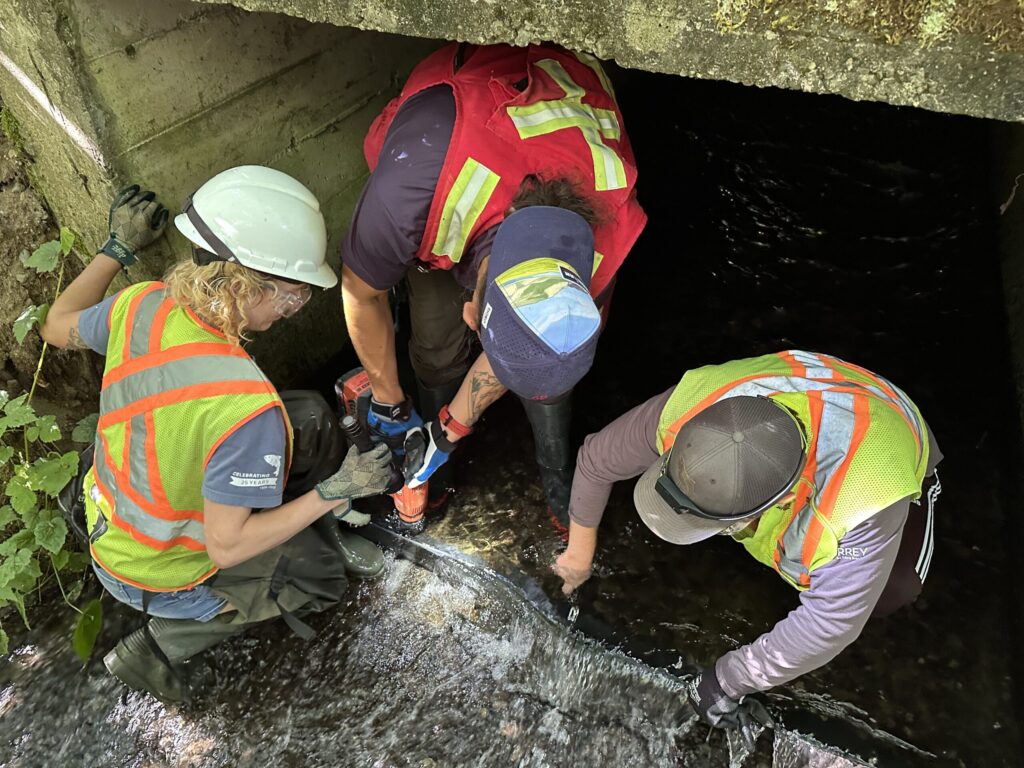
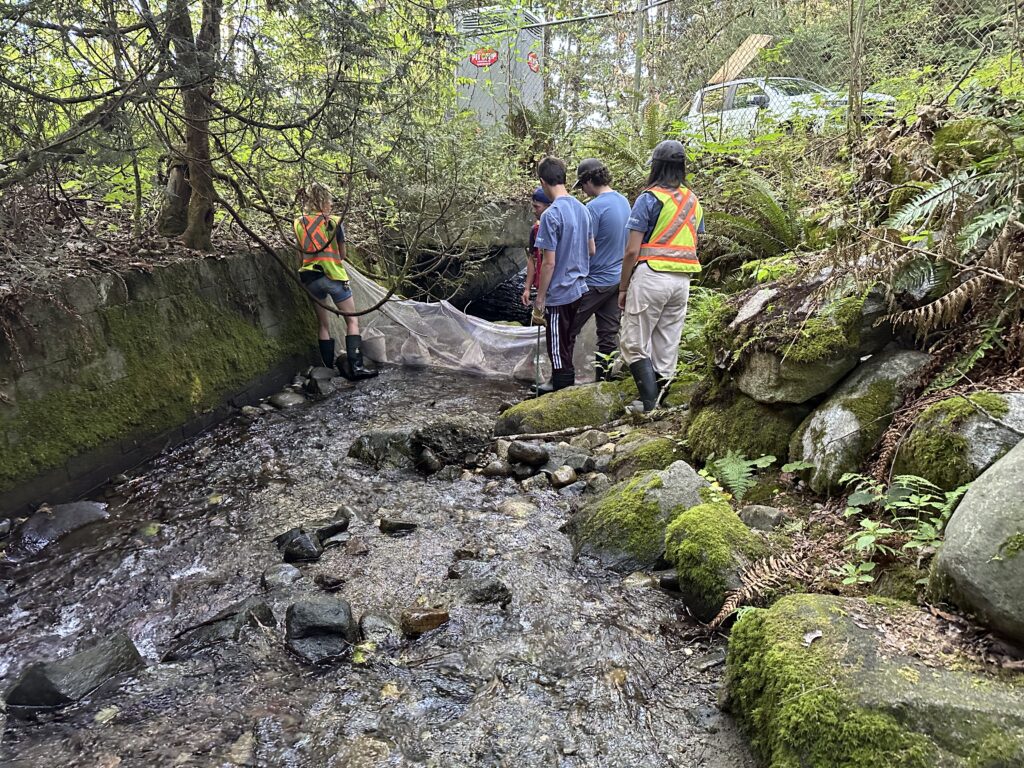
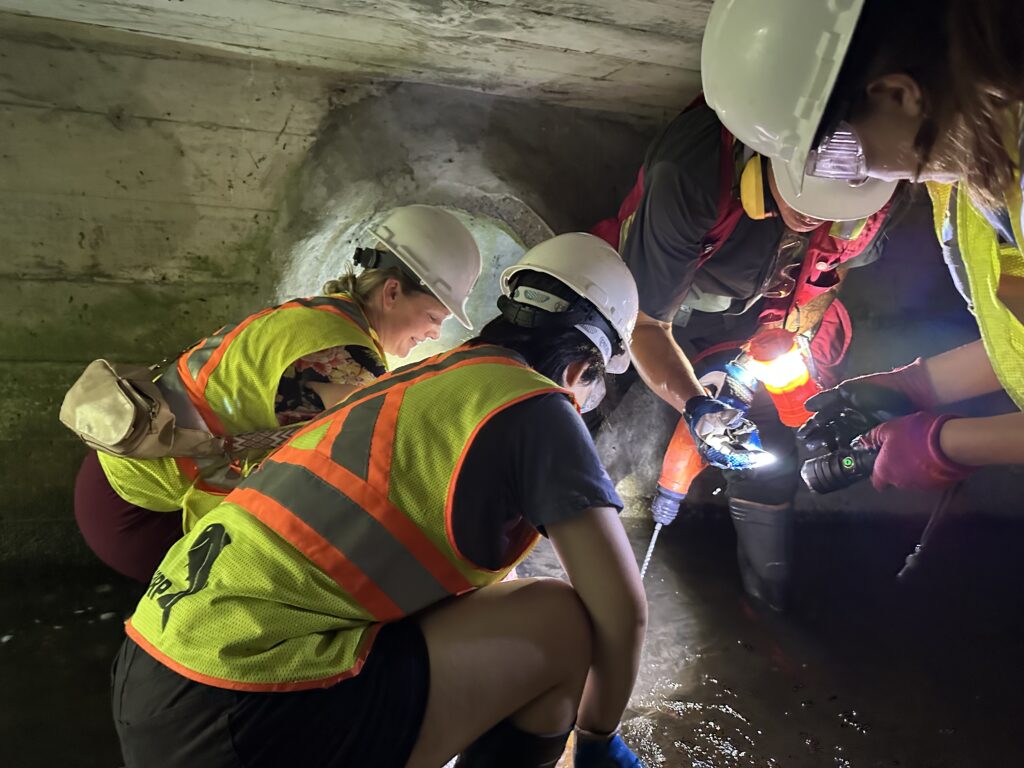
SSA Environmental staff then worked to train SHaRP students and project managers to install FlexiBaffles at predetermined intervals through the flume. Students isolated the project area with barrier nets. They then installed FlexiBaffles using concrete drills and wedge anchors.
Students encountered masses of blackberry briars and tough access conditions, but they persevered. And the results speak for themselves!
Students will now monitor fish passage this fall as salmon begin their spawning migration.
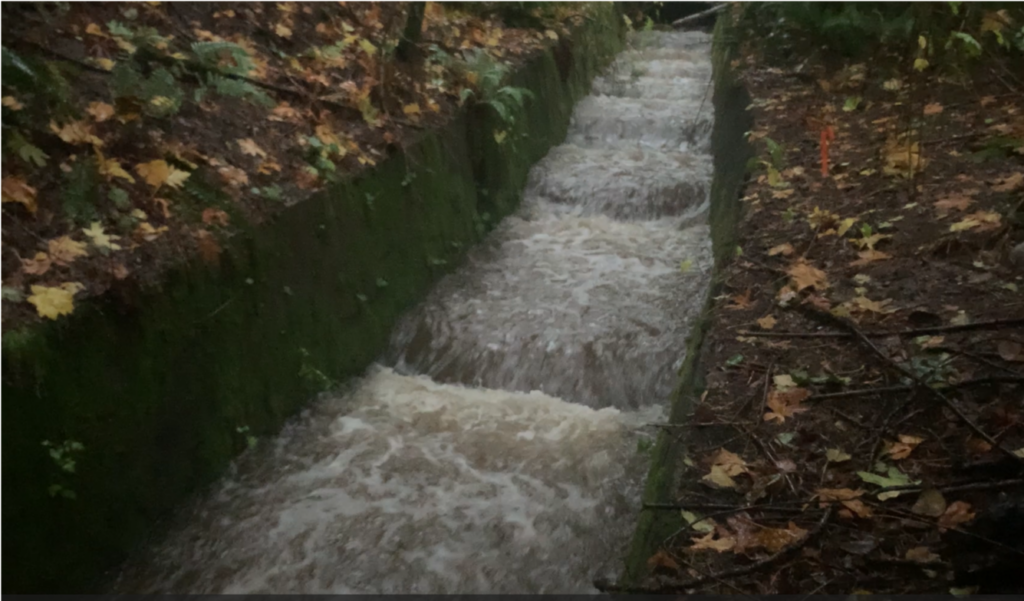
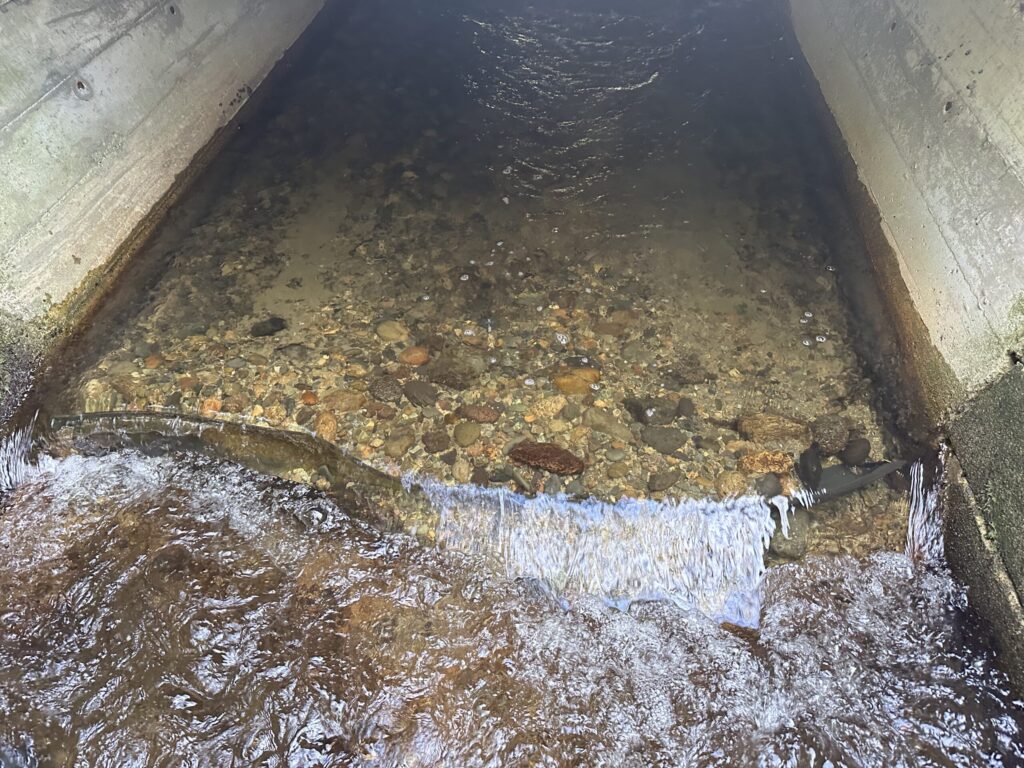
Here are the FlexiBaffles after a significant rain event. Note the resting areas between each FlexiBaffle.
The Nooksack Salmon Enhancement Association (NSEA) is a community-based, non-profit organization focused on reversing the trend of declining salmon runs in Whatcom County in Washington State. The NSEA works to enhance river and riparian habitat to support salmon recovery. They also work to educate people of all ages on how to provide Pacific salmon and steelhead with the best chance at survival.
We were contacted by the NSEA to develop a FlexiBaffle installation in a large box culvert on Terrell Creek, a tributary to Birch Bay on the Northern Puget Sound. The purpose of the project was to improve passage conditions for Pacific salmon migrating to their spawning grounds. This video documents the installation of the FlexiBaffles by NSEA staff.
The Fish Passage Action Team is an international coalition of people working to improve fish passage through road culverts and other conveyances. We have developed a variety of systems to improve the hydraulics in culverts and other conveyances to create better passage conditions for a variety of fishes and other aquatic organisms.
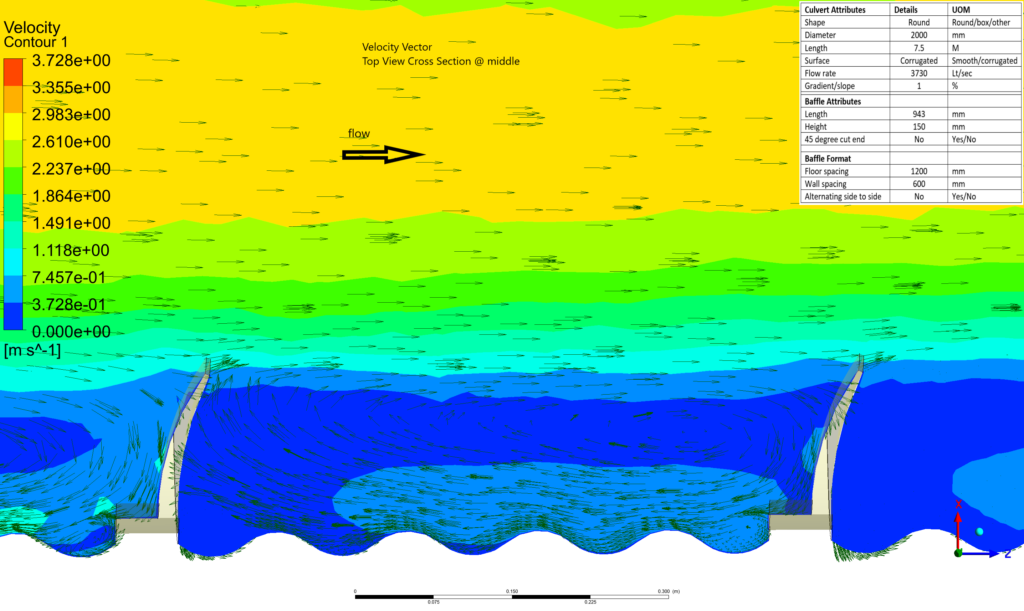
We recently began developing Computational Fluid Dynamic (CFD) models to demonstrate the effects if the FlexiBaffle on hydrology of a culvert. We have developed baseline CFD models to assess the spacing and configuration of FlexiBaffles to create the conditions to meet various fish passage standards such as water depth and velocity.
We can now also provide an interested party an evaluation of your specific project site. We can use the actual dimensions, configuration and expected flows through your culvert, and we can develop a recommended FlexiBaffle installation. We can also provide the CFD modeling results that demonstrate that your FlexiBaffle installation is meeting the intended fish passage conditions. The link below is a Fish Passage Action Team newsletter on the first CFD model outputs.
The New York Department of Environmental Conservation (DEC) is working in cooperation with Trout Unlimited to study fish passage through a perched culvert within the Beaver Kill drainage in Delaware County. DEC staff installed FlexiBaffles in a culvert to improve fish passage.
They are now using RFID fish tag technology to evaluate the passage of three trout species through the culvert outfit with FlexiBaffles. The DEC created a great video explaining this project. We look forward to working with these groups on future successful fish passage projects. Please contact us if you need information on the #flexibaffle. #TU#fishpassage#culvert#conservation
The IDFG used genetic testing to evaluate the success of installing baffles in a culvert on the Potlatch River in the Clearwater Basin. The state installed baffles in a culvert in an effort to help anadromous steelhead access historic spawning habitat. Researchers used genetic monitoring to observe how in just two years the composition of salmonids above the culvert was moving from the resident rainbow trout to the ocean-going life history of steelhead. Steelhead were again able to access historic spawning habitat.
Our friends in New Zealand have developed some pen and ink illustrations of the FlexiBaffle installed in a culvert to improve fish passage. There is also an illustration of a modified FlexiBaffle installation equipped with spat rope. This type of application is intended for passage of weak swimming species such as eels.
The Johnson Creek Watershed Council (JCWC) is a successful watershed restoration group focusing on Johnson Creek, a tributary to the Willamette River near Portland Oregon. Led by Executive Director Daniel Newberry, the JCWC works with the community to plan and implement a variety of volunteer and restoration activities in the Johnson Creek Basin. We worked with Restoration Project Manager Chuck Lobdell to complete the first FlexiBaffle installation in North America.
The JCWC wanted to improve fish passage through a 40-foot-long concrete culvert in the North Fork Johnson Creek Watershed. They found that coho salmon would exploit available habitat above the culvert of passage conditions were improved.
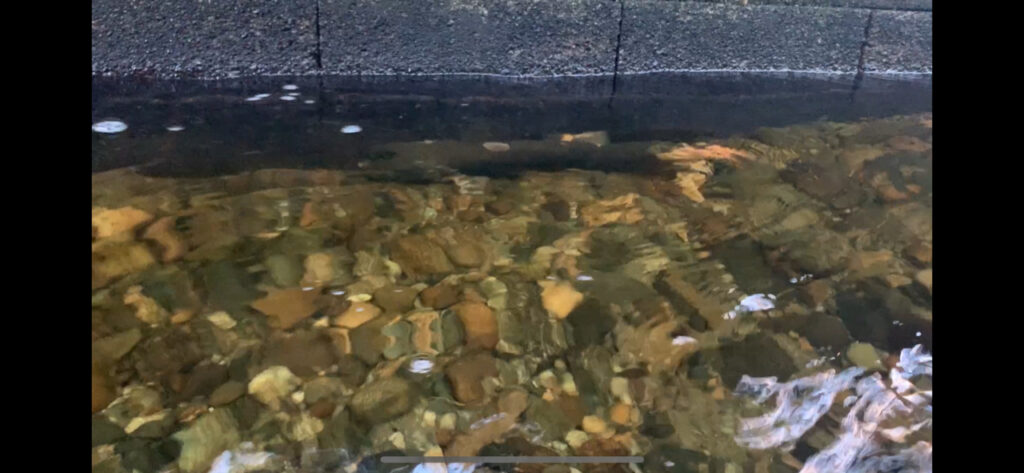
The video below demonstrated the results of the FlexiBaffle installation. The JCWC staff demonstrates how the flexible baffles interrupts laminar flow through the culvert and created resting pools which would allow fish to more easily pass through the culvert.
The JCWC installed FlexiBaffles in another culvert just upstream of that site. We will keep you posted on how it worked when we go out and inspect this summer. Stay tuned!
I talked with Cassie Jordan about culverts and fish passage. This was my first podcast and it was a lot of fun!
Here is how Cassie introduced the podcast.
Join Cassie Jordan and Shane Scott, owner of SSA Environmental LLC, to learn how installing flexible culvert baffles is an easy and inexpensive method to improve fish passage through culverts. Salmon, trout, and other fish and aquatic species are often blocked from their habitat by poorly designed or constructed culverts. Repairing or removing culverts is costly and requires considerable time and resources. SSA has developed culvert baffles that improves fish passage in an effective and economic manner.
About Shane Scott: Shane has over 30 years’ experience working with fish passage and water quality issues. He works with utilities and other industries in minimizing adverse effects of developments on fish and wildlife resources in a cost-effective manner. Shane has worked with Clients to development and implement a variety of fish and wildlife mitigation measures that are both biologically effective and cost efficient. He has also worked on some of the largest and most complex fish passage projects in North America.
In this video, Kelly Hughes will demonstrate the tools and methods needed to properly install the FlexiBaffle. An installation like this will improve passage for fish and other aquatic organisms.
Check out this video of several FlexiBaffles in culverts throughout North America. The FlexiBaffle creates hydraulic conditions to improve the passage of fish and eels and other aquatic organisms. The flexible baffle material allows rocks, logs and other debris to pass through the culvert which eliminates expensive and dangerous maintenance required to remove the material. Also, the flexible baffles bend lay flat at high water, so they have minimal effect on culvert capacity.
We finally entered the next generation of website operation. We plan to post updates for the variety of interesting projects we work on for out valuable customers.
We mean it when we say, “Trusted Solutions for Valuable Customers…”.
Cookie Consent
We use cookies to improve your experience on our site. By using our site, you consent to cookies.
Websites store cookies to enhance functionality and personalise your experience. You can manage your preferences, but blocking some cookies may impact site performance and services.
Essential cookies enable basic functions and are necessary for the proper function of the website.
Name
Description
Duration
Cookie Preferences
This cookie is used to store the user's cookie consent preferences.
30 days
These cookies are needed for adding comments on this website.
Name
Description
Duration
comment_author
Used to track the user across multiple sessions.
Session
comment_author_email
Used to track the user across multiple sessions.
Session
comment_author_url
Used to track the user across multiple sessions.
Session
Statistics cookies collect information anonymously. This information helps us understand how visitors use our website.
Google Analytics is a powerful tool that tracks and analyzes website traffic for informed marketing decisions.
Contains information related to marketing campaigns of the user. These are shared with Google AdWords / Google Ads when the Google Ads and Google Analytics accounts are linked together.
90 days
__utma
ID used to identify users and sessions
2 years after last activity
__utmt
Used to monitor number of Google Analytics server requests
10 minutes
__utmb
Used to distinguish new sessions and visits. This cookie is set when the GA.js javascript library is loaded and there is no existing __utmb cookie. The cookie is updated every time data is sent to the Google Analytics server.
30 minutes after last activity
__utmc
Used only with old Urchin versions of Google Analytics and not with GA.js. Was used to distinguish between new sessions and visits at the end of a session.
End of session (browser)
__utmz
Contains information about the traffic source or campaign that directed user to the website. The cookie is set when the GA.js javascript is loaded and updated when data is sent to the Google Anaytics server
6 months after last activity
__utmv
Contains custom information set by the web developer via the _setCustomVar method in Google Analytics. This cookie is updated every time new data is sent to the Google Analytics server.
2 years after last activity
__utmx
Used to determine whether a user is included in an A / B or Multivariate test.
18 months
_ga
ID used to identify users
2 years
_gali
Used by Google Analytics to determine which links on a page are being clicked
30 seconds
_ga_
ID used to identify users
2 years
_gid
ID used to identify users for 24 hours after last activity
24 hours
_gat
Used to monitor number of Google Analytics server requests when using Google Tag Manager