

When it comes to improving fish passage, speed and simplicity matter — especially when retrofitting existing infrastructure on busy transportation corridors. A recent project in New Zealand shows just how quickly significant habitat connectivity gains can be made.
ATS Environmental, led by Kelly Hughes, recently upgraded a 120-meter-long, 1800mm-diameter HDPE culvert beneath a federal highway to improve passage for native freshwater species, including small-bodied galaxids and longfin eels. Both species struggle with the shallow depths and high velocities typical of smooth-walled culverts.
Installation in Just Three Hours
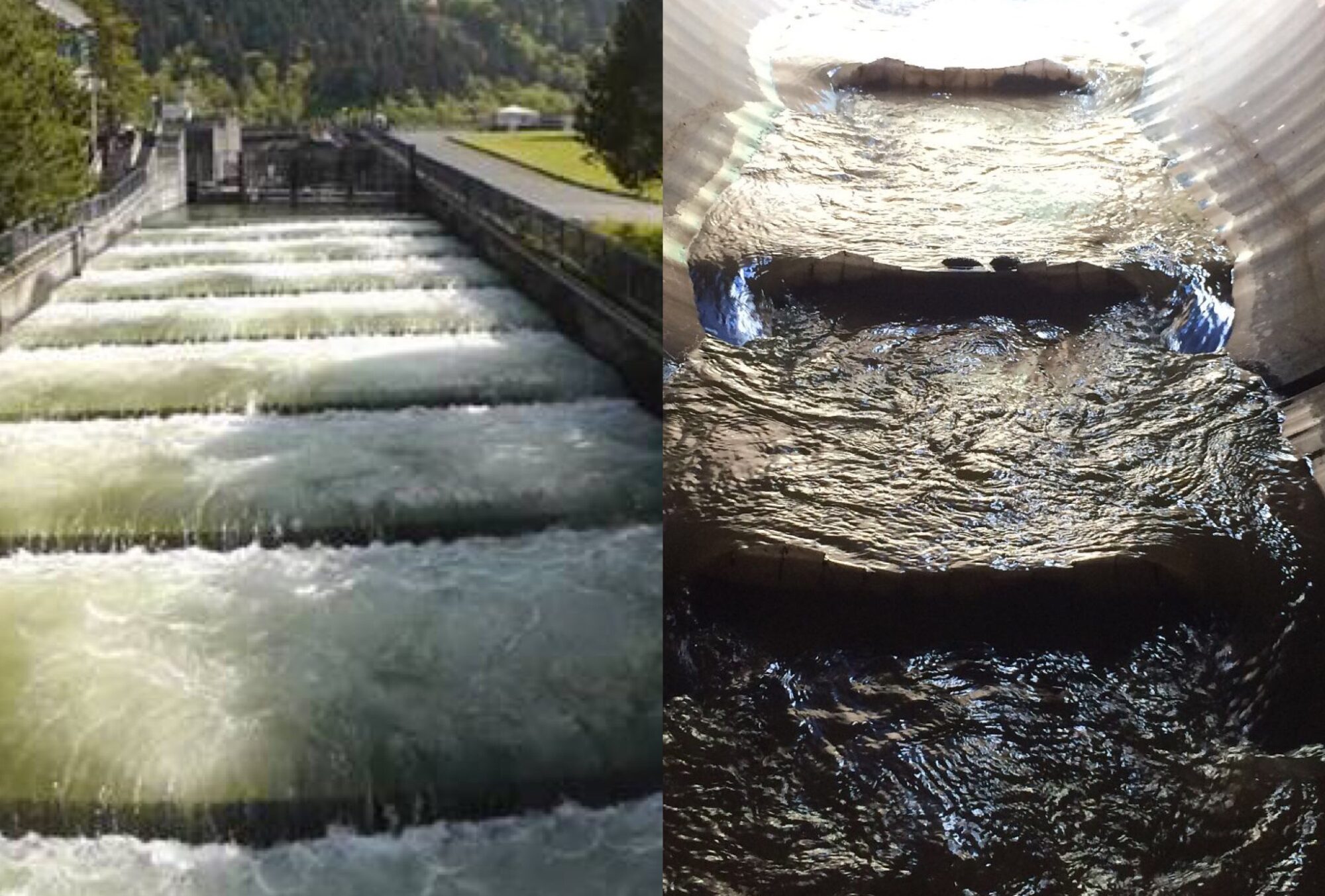
The ATS team retrofitted the culvert with 100 FlexiBaffles, each 600mm in length, fixed securely to the HDPE surface with stainless steel screws to ensure long-term durability.
The baffles were installed off-center by 50mm to create a preferential low-flow channel — a subtle but critical detail for enabling fish passage during dry periods or seasonal low flows. Despite the culvert’s 2% gradient and large diameter, installation took just three hours for a two-person crew using standard hand tools.
Key specifications:
- Spacing: 1.2 meters between baffles
- Culvert diameter: 1800mm
- Culvert length: 120 meters
- Material: EPDM rubber baffles, stainless steel fasteners
- Shape: Round HDPE
Immediate Hydraulic Improvements
The retrofit delivered instant changes to flow conditions:
- Water depth increased from 20mm to 80mm
- Wetted width expanded from 1.5 feet to 2.5 feet
- Water velocity decreased, creating rest zones and better swimming conditions
And the most important result: fish were able to pass through the culvert immediately after installation, demonstrating the design’s effectiveness in real time.

A Scalable Solution for Fish Passage
This project is a clear example of how targeted retrofits can quickly restore connectivity for native species without expensive excavation or major construction. By increasing hydraulic complexity and mimicking natural stream conditions, FlexiBaffles give small-bodied fish and other aquatic organisms the opportunity to reclaim habitat previously cut off by infrastructure.
As New Zealand advances its freshwater restoration and biodiversity goals, practical solutions like this are not only helping native species recover — they’re setting a model for efficient, field-ready retrofits worldwide.

Considering a culvert retrofit or fish passage upgrade?
We can help you identify the right baffle configuration for your site — whether you’re working in New Zealand, North America, or anywhere habitat connectivity matters. For more information click here.
#FishPassage #HabitatConnectivity #CulvertRetrofit #FlexiBaffle #EnvironmentalEngineering #AOP #Galaxids #EelMigration #SSAEnvironmental #ATS #InfrastructureWithEcology #NewZealandConservation